Showing posts with label oneness. Show all posts

Monday, 13 November 2017

Healing the Wounds Part 4 - Restituion and Resolve

[Part 1]  [Part 2] [Part 3]

Making a full confession and asking for forgiveness is a vital part of healing a wound, but by themselves they are just words.  Those words need to be followed up with action to be taken seriously.

Restitution
Making restitution is a vital part of the healing process.  True regret comes with a desire to make up for the wrongs done.  Simply stopping the hurtful behaviour is not enough by itself.  Consider the case of a bank robber who expresses deep regret and sorrow over what they did, promises they won't do it again, but keeps the money and hides from the law.  It calls their words into question if they are unwilling to pay back or make up for what they did.

Sometimes however a direct form of restitution like that is not possible.  That doesn't mean you have a excuse to skip this step.  What you should do instead is to make restitution by making up for what you did.  Swing the pendulum to the other side and counteract a misdeed with it's opposite.

A spouse who had a habit of speaking harshly to their companion can't undo the fact that they said what they said, but the can make restitution by making a habit of giving their partner genuine praise instead.  A spouse who has been inconsiderate of their partner's sexual needs can't go back in time and change years of selfish refusal, but they can makes restitution by doing all they can to make the future one that includes a high level of sexual fulfillment for their spouse.

Restitution like this is not something you do for a week or a month then drop, it is a lifelong change.  It shows your spouse you have had a true change of heart rather than just a change of mind.  It proves to them that you are no longer the kind of person who would do such a thing.  It wins back their trust and confidence in your feelings for them.

Resolve to never do it again

True regret is a painful thing, and it should be painful enough that it drives you to do all the steps after it.  It should also be painful enough to leave you resolved to never do such a thing again.  Your resolve reform yourself needs to be expressed to your spouse in words, and demonstrated in deed for the rest of your life.  As I mentioned before, the Lord said:
By this ye may know if a man repenteth of his sins—behold, he will confess them and forsake them. (D&C 58:43)
If a spouse makes their confession, asks forgiveness and makes restitution for what they did, then goes on to do it again (even if many years later) it re-opens the original wound.  After that, confessions will be harder to take as sincere and a greater restitution will be required.

In Luke 7:37-50 a woman known to be a sinner washes the feet of the Savior with her tears and anoints his feet with expensive ointment.  Simon the Pharisee thought that if Christ were a prophet, he would know what kind of woman this was and not let her do this.  Christ, sensing his thoughts taught:
Her sins, which are many, are forgiven; for she loved much: but to whom little is forgiven, the same loveth little. (Luke 7:47)
Likewise, to whom much is forgiven, the same loveth greatly as this woman showed.  These steps allow a couple to tap into the power of the atonement which can heal the wounds and restore peace and love to a marriage.  When there is both forgiveness and all the elements of reconciliation present, a marriage can come out of adversity stronger than it was before the trial began, with deeper love between the spouses.  Even a case of adultery can end with hearts healed and a marriage strengthened if both do their part.   Even if a spouse is unwilling or slow to forgive, this process will be a blessing to those who follow it. 

Sunday, 22 October 2017

Healing the Wounds Part 3 - Reveal and Request

[Click here for Part 1]  [Click here for Part 2]

So far we've talked about things that need to happen inside the head and heart of the spouse that caused the hurt, but to actually heal the relationship requires taking action.  They need to fix what they broke as best they can.  It is not an easy process and the reality is that things may need to get worse before they get better.  That is why the first two steps are so important.  It is unlikely that somebody will take the painful actions needed to heal the relationship unless driven by a pain of regret that is greater.

Reveal Everything
The first action is to fully confess your wrongs.  Not just the parts your spouse already knows about, but the things they don't know as well.  Come clean, put it all out there.  It is not enough to just stop doing wrong. The Lord said:
By this ye may know if a man repenteth of his sins—behold, he will confess them and forsake them. (D&C 58:43)
It is best to do this without having to be compelled to by circumstances.  A person who is caught red handed and only admits to the things that have already been uncovered will seem like they are only sorry they were caught,  even if there really is nothing more to confess, and they genuinely regret their actions.

Apologize and lay out what you did, how often, for how long, why (not as an excuse).  Also share your journey of coming to realize and regret your actions and the pain you feel as a result. 

It will be tempting to say to yourself  'There is no need to confess that part, they don't know, I won't do it again, so why put them through the pain of revealing it?'  It would be a mistake to act in that way however.

Keeping a secret like that is harmful to yourself and to your marriage.  You will not be able to free yourself of the pain of regret and personal shame of what you have done.  Instead you will carry that burden and it will eat at you and undermine your happiness.  It will leave you aware of your unworthiness which is something Satan can use against you when he tries to tempt you again, and he will try.  You won't be able to feel fully loved and accepted by your spouse either.  When your spouse says they love you, you will wonder if they would have said that if they knew the whole story.

Even if your spouse doesn't know, they will likely sense that you have not been fully open with them or carry nagging doubts that weaken the marriage and create insecurity.  They also can not forgive you for something they do not know you did.  Some day they will know exactly what happened.  Either at the judgement bar or sooner they will know it, and also know that you hid it from them and lied to them that there was nothing more to confess. Your reconciliation will then be undone and the relationship will be worse off than before.

In contrast, a full, unforced confession may cause a lot of pain in the short term, but it also helps to rebuild trust and give hope that things can be made better.  It makes it easier for your spouse to forgive when your actions demonstrate true repentance by coming clean voluntarily.  Confession is good for the soul no matter what the reaction is.  The burden of hiding and lying will be gone and the process of healing will have started.  Even if the revelation leads to the break up of the marriage, it enables you both to heal and move forward.  A marriage held together by lies and secrets is not going to become an eternal marriage.

Revealing everything may be a process rather than an event.  Usually when a spouse is blindsided by something big they will not absorb it all at once.  They will come back with questions, request clarification, and need to go over something a few more times before they can wrap their head around it.  Answer every question and request completely until they are fully satisfied that they know the situation.  Don't hide, justify, downplay or brush off anything.  Give them the security of knowing there will be no nasty surprises down the road.

Request Forgiveness
Confessing your wrongs implies a request for forgiveness, but it should still be stated outright that you are sorry for what you did, and you wish to obtain forgiveness from them and from God.  The apology is your admission that you are in the wrong.  It also acknowledges your spouse's pain and validates it.  It brings them into the process, laying out what their part is and calling on them to start the work of forgiving.

While it is true that we have an obligation to forgive others (D&C 64:9-10), do not ask for forgiveness as if it is owed to you or that you deserve it because of your wonderful confession and painful regret.   You are asking your spouse to give you something you do not deserve.  They may owe it to God to forgive, but they do not owe it to you, even if you have forgiven them of something worse, even if you already have God`s forgiveness for what you did.  Their forgiveness is a gift and it should be humbly asked for and graciously received when offered.

It may take a spouse some time before they are ready to offer that gift.  Give them that time.  You do not get to decide how they should feel or how soon their heart should be ready to forgive.
Sometimes it is necessary to apologize more than once, especially if the offense is particularly hurtful. I have learned over the years that it sometimes takes several apologies before the sincerity of the apology is able to penetrate the wounded heart of an offended spouse. (Repentance and Forgiveness in Marriage, Ensign, September 2011)
When there is a strong bond of love between a couple, then there is a desire to forgive and return to the joy that was shared before the offense took place.  That reconciliation has to be earned however, otherwise the forgiving spouse is just allowing themselves to be walked all over and abused.

Confessing and asking for forgiveness is not the limit of what must be done to heal the wounds and restore the same level of love and trust that existed before.  In Part 4 we'll go over the last two things that must be done.

Sunday, 24 September 2017

Healing the Wounds Part 2 - Recognition and Regret

[Click here for Part 1]
Imagine you are watching a typical date movie.  Boy meets girl, they fall in love, he does something that hurts or offends her, and now she is at the airport ready to board a plane to Europe and leave her heartbreak behind forever.  He rushes to the airport and catches up to her at the last possible moment and looking deep into her eyes he says "It was only one time, it wasn't my fault, you're making a big deal out of nothing and you just need to get over it."

I don't think she would be very unlikely to change her plans based on what he said.

As I mentioned in Part 1, the path to healing a relationship with a spouse (or anyone else) is the same process as healing our relationship with God when we sin, so I'll be taking quotes from scripture and church leaders about the process of repentance and applying them here to the process of reconciliation.

Recognition
The first step in healing the wounds is to recognize that you caused a wound.  If you didn't mean to wound you spouse it doesn't mean there is no wound, and if you can't recognize your wrongdoing you won't be able to reconcile over it.

Recognition is something that happens in the mind.  You realize on an intellectual level that your actions or words were not what they should have been.  This may be because you can see the hurt or anger you caused, or because you are aware of how your actions violate expectations and reasonable treatment of other people.

The enemy of recognition is defensiveness and justification.  If you push back against the idea that you are in the wrong and try to rationalize it, then you are not going to be able to make things better.  It doesn't matter what wrongs your spouse has done, or what other circumstances exist, you have to accept responsibility for your actions and embrace the fact that it was the wrong thing to do.  You don't get to decide how somebody else should feel about something.  We all want to be the hero of our own story, but there are times we need face up to the fact that we have become the villain in another person's story and will stay that way until we change it into a story of our redemption.

Regret
Regret is probably the most important, as well as the hardest step to take.  We live in an age where anything that produces guilt is labeled as judgmental and intolerant, but that ideology creates a barrier to reconciliation and repentance.  A 'safe space' will not save your relationship, it will allow wounds to fester until the relationship is too infected to survive.

The Apostle Paul praised 'godly sorrow' as something the leads to repentance and salvation (2Cor 7:10).  It is your regret that will provide the emotional fuel to do what you need to do to achieve a reconciliation.  Without an appropriate level of regret you might go through the motions of each step, but they will be hollow and meaningless actions that won't produce lasting results.

While recognition happens in the mind, regret happens in the heart.  It takes heart wrenching regret to bring about a mighty change of heart and that is why repentance is often described as a painful process. The depth of your regret has to match the offense.  You can't cause a bucket load of pain for your spouse then offer a teaspoon of regret and expect it to balance out.

President Spencer W. Kimball said:
There must be a consciousness of guilt. It cannot be brushed aside. It must be acknowledged and not rationalized away. It must be given its full importance. If it is 10,000 talents, it must not be rated at 100 pence; if it is a mile long, it must not be rated a rod or a yard; if it is a ton transgression, it must not be rated a pound.  (What is True Repentance, Ensign, May 1974)
Alma described the regret he felt for his sins as being "tormented with the pains of hell" (Alma 36:13)

Your spouse needs to see your regret as well.  When they see your regret it softens their heart and shows them your heart is changing which builds trust.  If however your spouse has not seen genuine and sufficient regret, don't expect your apologies to carry a lot of weight.  To them it will feel like you are going through the motions, doing what you understand in your head is the right action to take, but lacking the emotion in the heart needed to really mean it.  They can forgive you, even if you don't do any of these steps, but if you want to restore the relationship and heal the wounds you will have to put your heart into it.

This can't be faked either, and it must be regret for what you did, not regret that you got caught.  If you genuinely do not feel an appropriate level of regret over what you did, you will need to work on that.  Have some empathy for your spouse's pain.  Don't make yourself a judge of how they should feel based on how you feel about things.  We all have different sore spots, different insecurities and fears.  The context of your life is not the same as the context of their life.  What may seems like a harmless bit of ribbing or a minor faux pa to you could be a devastating, cruel and hurtful attack in your spouse's eyes because of their past experiences and struggles in life.  You have to respect their feelings as valid and real even when you do not share them.

It may help to talk with your spouse to try and understand the situation from their perspective.  It may be a painful conversation to have, but it will help you understand your spouse better and show you are serous about trying to fix things. It may help you to avoid inadvertently causing more pain in the future.  Listen and don't judge, you are trying to understand them better so they need to be the one doing most of the talking.  Questions to get clarification are OK, but don't try and talk them out of feeling what they feel or back them into a corner.  Seeing their pain will hopefully soften your heart as well. 

Vindictiveness, hardness of heart, and pride will block genuine regret. If you struggle with those, pray for greater humility, empathy and understanding.  Bring the spirit into your life to soften your heart by reading the scriptures, attending church, going to the temple, and serving others. Seek to tap into the gifts of the spirit to help discern your spouse's side and empathize with them.

When you property recognize and regret what you have done the rest of the steps become things that your heart will compel you to do to free yourself of that pain.  They still may not be easy steps to take, but you'll have a strong motivating force to push you through it.  We will discuss the first action steps in Part 3.

Sunday, 10 September 2017

Healing The Wounds Part 1 - Where To Start

I hope that those of you reading this blog do not assume that my marriage is perfect.  Many of the ideas I talk about here are things my wife and I are trying to live up to (with varying degrees of success).  While my wife and I love each other dearly and do our best, we are imperfect people and there are times where we cause hurt to each other.

This is a normal part of marriage.  Getting close to somebody emotionally goes hand in hand with giving them the ability to cause far deeper wounds to the heart than any stranger could ever inflict.  It often happens with no intent to cause harm, and even no realization that their actions or words would cause pain.  Certainly sinful behaviour like adultery, pornography usage etc. causes serious hurt in marriages, but spouses can hurt each other without committing such sins as well. 

These hurts are damaging to the relationship, and they must be addressed and healed. Don't count on time to erase everything, that often will make things worse.  If not dealt with correctly, some wounds may fester and spread.  Even if that doesn't happen and it seems to have been swept under the rug, over time an accumulation of scars take their toll.

Situations like this, even though they may not involve sin, are still closely related to the gospel principles of forgiveness and repentance.  God loves us more than we really understand.  When we rebel against his will, betray our covenant to follow Christ and instead commit sins, we hurt him.  We damage our relationship with our Heavenly Father.  The process of repentance is not a legal process, it is an emotional process for repairing that relationship and seeking a reconciliation.  The same process applies when we need to repair a marriage relationship, friendship, or any other relationship. 

Forgiveness: Human and Divine
The starting point of that process is forgiveness.  There are two types of forgiveness, human and divine.  Christ said:
Wherefore, I say unto you, that ye ought to forgive one another; for he that forgiveth not his brother his trespasses standeth condemned before the Lord; for there remaineth in him the greater sin.  I, the Lord, will forgive whom I will forgive, but of you it is required to forgive all men. - D&C 64:9-10
Divine forgiveness, the forgiveness a sinner seeks from Christ, comes only on condition of repentance.  When it is obtained, the stain of sin is washed away from the transgressor's soul by the power of the atonement.

Human forgiveness however does not cleanse the sins of the offender, and we are obligated to give it freely and unconditionally, even if they never repent.

Forgiving somebody doesn't mean you pretend it never happened.  It doesn't mean you extend to them the same level of trust as before.  It doesn't mean  you stop hurting.  It certainly doesn't mean you make excuses for what they did or give approval.  While this video is not from an LDS source, but I think it does a good job clarifying what human forgiveness is and is not.

What it means to forgive is that you let go of your anger, bitterness, vindictiveness and hostility.  You don't lash out and try to 'make them pay' for what they did.  It doesn't let them off the hook, but it does give them an environment that encourages and facilitates their repentance while preventing your soul from becoming poisoned with hate and contention.  Whatever your spouse did, not forgiving them for it is a bigger sin because you make yourself an obstacle to their repentance.

Repentance and Reconciliation
To repair the relationship the offender must address what they did and do what is needed.  For the sake of this blog, if the relationship being repaired is between a person and God I'll call it repentance, and if it is between a person and their spouse or other person I'll call it reconciliation.  The process is the same in either case but with repentance comes divine forgiveness and reconciliation is most easily achieved when human forgiveness has already been given.  Only after we have repaired our relationship with God is He justified in cleansing us of our sins.

The onus is on the offender to make this effort, and they do not get to decide at what point the other party should reconcile with them.  When reconciliation does happen however, the relationship is restored, even strengthened. Repentance is often described as a painful process, and with good reason.  Likewise reconciliation can be painful too.  There are times where repentance requires the guidance and counsel of a Bishop, and times where reconciliation requires the help of a professional marriage counselor.

In Part 2 I'll start to go over the steps of this process, and more importantly why those are the steps that need to be taken, and how to proceed with them.

Sunday, 28 May 2017

Is your spouse's happiness your responsibility?

Prophets and apostles have counseled the members of the church a number of times that a married couple should each seek for the happiness of their spouse.

For example:
President Gordon B. Hinkley
True love is not so much a matter of romance as it is a matter of anxious concern for the well being of one’s companion. (link)

Elder Russel M Nelson
Harmony in marriage comes only when one esteems the welfare of his or her spouse among the highest of priorities. When that really happens, a celestial marriage becomes a reality, bringing great joy in this life and in the life to come. (link)

Elder Jeffery R. Holland
Find someone [to marry] ...who finds his or her happiness in your own. (link)

President Spencer W. Kimball
If one is forever seeking the interests, comforts, and happiness of the other, the love found in courtship and cemented in marriage will grow into mighty proportions.(link)

Does this mean that you are responsible for your spouse's happiness?  Are they responsible for yours?

In a way, yes you are...
The answer is 'Yes' in that we have a responsibility to do what we can to promote the happiness of our spouse, it is part of our stewardship as a spouse.  We should know (or find out) what our spouse needs to feel loved, happy and content with their life.  Not just with the marriage relationship, but in all areas of life.  If it is within our power to bring them greater happiness (without breaking commandments or laws of course), we should do it.

It may require us to make changes or sacrifices.  I may mean doing things you wouldn't normally do.  It may require gently helping your spouse overcome their challenges, or patiently waiting for the time they are ready to take that on.  It may just be giving them support and encouragement and expressing faith in them as they confront things you are not able to do anything about.  It can be giving them your best, honest counsel, forgiving them of their mistakes, and having compassion and charity toward them in their imperfections. It may mean seeking their forgiveness for things we've done.

Ideally it is supposed to be a two way street where your spouse does the same for you.  In practice that is not always the case, but even then it doesn't change our duty toward our spouse and their happiness.  When neither spouse seeks the happiness of the other there is a downward spiral that puts the marriage at serious risk.  If even only one spouse is seeking the happiness of the other, this is less likely to happen, and over time their example may rub off on their partner.

...and in another way, no you are not.
The answer is also 'No' in the sense that each person has the final responsibility for themselves.  Your obligation is to do you part to enable their happiness, after that it is up to them.  If there are mental health issues like depression, you may have to accept (at least for a time) that their unhappiness is not related to their circumstances in life and beyond your power to affect, other than to try and help them find an effective treatment plan.

As much as I wish I could remove every discomfort of any kind that my wife feels, it is not within my power to undo the Fall and make her world a Paradise.  I do what I can, and how she responds to the challenges she faces is her choice.  Likewise I am responsible for my happiness, and she is responsible for doing what she can to facilitate it.

If however the husband and wife are selfish, put seeking their interests first, treat their spouse with contempt, ridicule, verbal, emotional, or physical abuse, take them for granted, withhold help, comfort, support, encouragement, intimacy, or otherwise mistreat them or hedge up the way before them, then they make themselves responsible for the outcome of those actions and the damage they do to the marriage.

Nobody should be a hostage to their spouse's emotions, but they should be a help meet and partner.  And seeking the happiness of your spouse is very likely to result in a greater happiness for you than if you sought your own happiness above theirs.

Sunday, 30 April 2017

Above and beyond

One thing I learned as an adult is that it doesn't take a lot to stand out from the crowd.  Just a little extra effort and magic starts to happen.  The same principle applies in our marriage too.  It is easy to stick with the daily routine of life, but when we break out of that and go the extra mile for our spouse amazing things can happen.

I'm not talking about doing something special for your spouse as a reward for something they have done, or to make up for something you did, or because it is a special occasion. I do encourage doing that, but here I'm talking about doing something extra for your spouse's happiness just because you love to make them happy. 

It doesn't have to some grand or expensive gesture. Just the fact that it breaks up the routine will make it stand out both at the time and later in memory. It has to be something that will put a smile of delight on their face, so it would probably be most effective if it was something related to their primary love language (not yours).  Here are some suggestions:

Words of Affirmation
- love letter
- greeting card
- affectionate (or sexy) candygram
- shirt, mug, certificate etc. proclaiming them 'World's Best _______'
- social media post praising your spouse

Acts of Service
- before they can stop you, do some chores for them that they normally do
- take care of something they haven't been able to get to
- give them a day off and wait on them
- give them a massage, draw a bath for them
- cook them a special meal
- do that thing they have wanted you to take care of for a while

Gifts
- give them something related to their hobbies and interests
- take them out to dinner
- them them shopping, tell them how much they can spend on something just for them
- flowers / candy/ jewelry
- make something for them

Quality Time
- go for a walk together
- run away together for a whole day, nothing planned
- play board games
- binge watch something they are interested in
- go dancing

Physical / Sexual contact
- get a room for the night
- spend the whole evening being physically intimate
- tell them they get to pick what happens and you'll go along with it
- fulfill a fantasy of theirs
- make yourself as attractive as you can for them (hair, makeup, lingerie etc.)
- try something new in the bedroom (bondage, oral sex, role playing etc.)

Going out of your way to please your spouse sends them some very important messages that strengthen the relationship.  It tells them:

I don't take you for granted.
When life has you both in a rut, even if it happens to be a good rut, over time a person can feel like they are taken for granted.  The usual ways of showing affection become common, habitual, expected and lose impact.  When a spouse tosses in something special now and then it tells their partner they are not taken for granted.  A bonus side effect to this is that they are far less likely to take the everyday affection you give for granted as well.

You are worth my time and effort, and our relationship is a priority to me.
Going the extra mile is a deliberate act.  The very idea of doing something extra and making the choice to do it happen because of your feelings for your spouse.  They know you could have spent your time and energy doing something for yourself, or on anything else, but you invested it in them instead. 

I know what you like, and I like giving it to you.
When your spouse sees that not only do you know in your head what it is that pleases them, but you also feel joy in your heart when you provide them with it, a huge emotional bond is created or strengthened.  Knowing your spouse 'gets' you is a very powerful thing.  It is an important element of all emotional intimacy. 

We are supposed to go the extra mile in our jobs, our callings and in serving others.  Certainly should make a point of going above and beyond the usual in our marriages as well.  And when you go the extra mile for your spouse a few times, don't be too surprised if they start going the extra mile for you in return.

Tuesday, 7 March 2017

Making time for intimacy

Time is a precious commodity.  You can not buy it, you can not earn it, you can not sell it, and you can not bank it.  Everybody has the same amount of time every day and all you can do is exchange that time for something else.  You can trade time for money, entertainment, education, exercise or sleep, and you can trade that time for sexual and/or non-sexual intimacy with your spouse.

It's easy reach the end of the day where your remaining time must be traded for sleep without trading any significant amount of it for those things that will make your marriage stronger and more joyful.  If this happens too often then the relationship will suffer from neglect.  If you are finding it a challenge to give your marriage the time it needs, consider the following ways to try and change that:

Obligations, Urgencies and Priorities
Our relationship with our spouse should be a very high priority.  Ideally we would spend our time according to our priorities, but that isn't always the case.  We have obligations that demand specific blocks of our time even though they might not be as high a priority as our marriage.  Urgencies also override our priorities.

Ask yourself if you should reduce the obligations you have.  Sometimes when a couple starts to drift apart they can start to fill that void with other interests and activities only to have those things take up so much of their time that it prevents any healing and reconnecting in the relationship.  Are there obligations that you should let go of for the sake of having more time together as a couple?  Are you trading time for what is good instead of what is best?

If you find too much of your time is spend responding to urgencies, is there something you can do to prevent them?  Are there others who can step up to help?


Planning
Having a specific night each week set aside as date night is as important to a marriage as Family Home Evening is to a family.  Dates do not have to cost money, it just has to give you time together with minimal outside distractions.

That is not the limit of planning however.  There are lots of little things a spouse can do to show their love, but often nobody thinks to do them.  Rather than rely on inspiration to hit at the right time, we can make plans for doing those things.  Smartphones have alarms and calendar apps that we can use to help.  A husband can set a reminder to pick up some flowers for his wife on his way home on Monday and to mail her a card next Thursday, a wife can set a reminder make his favorite meal on Wednesday and to really spice things up in the bedroom next Saturday evening.  Both can pepper their calendars with reminders for many different displays of love through the month.

Also make a point of planning ahead for special occasions.  Birthdays, anniversaries, Valentine's Day, and Christmas should not be last minute afterthoughts.  Be aware of them and plan well in advance how you are going to use the occasion to make your spouse feel loved and appreciated.

Planning specific nights for sexual intimacy was something that really helped my marriage.   Leaving it unplanned, then raising the question right at the end of the day when we were both at our lowest energy point was not a good strategy for us.  When there are specific days where it is understood that sex will happen there can be anticipation and preparation, spouses can hold energy in reserve for what they know is coming and arrive at the bedroom mentally and emotionally primed.  Nor does sex have to happen in the evening.  It can happen right before supper, as soon as you get home from church, in the morning before leaving for work, anytime that works for both of you. Make the world wait for you for a change.

Be creative and flexible with your plans.  And just because you have sex planned on some nights doesn't mean you can't have spontaneous sex at other times. 


Multi-tasking
There are many ways we can combine non-sexual intimacy with everyday life.  Send a flirty or romantic text when on a break at work.  Go grocery shopping together.  Fold laundry together while watching a romantic movie or just use the time to talk with each other.  I love to sit in Sacrament meeting with my arm around her shoulder, her snuggling into me.  She knows if she leans forward she'll get a back scratch.  Be aware of the opportunities you have to include affectionate touch and loving words into each day.  This is the start of foreplay.


When we trade our time wisely, it becomes an investment.  While the return on that investment won't come in terms of more time, it will come in terms of better times.

Sunday, 27 November 2016

Making The Holidays Merry For Your Marriage

Christmas is a wonderful time, but often it introduces stressful moments and new demands on us that can take a toll on our relationship with our spouse.  It doesn't have to be that way though, Christmas can (and should) be a time where your emotional, spiritual, and sexual bonds with each other are strengthened.  Christ came to this world to make it possible for you and your family to be together forever.  He wouldn't want the celebration of his birth to become an obstacle to having a wonderful relationship with your spouse.  Here are some suggestions to help Christmas become something that strengthens your marriage:

Do Christmas Things Together
There are lots of tasks that are specific to Christmas.  Putting up the tree and decorating it, putting up Christmas lights outside, shopping for gifts, baking, cooking Christmas dinner, etc. etc. etc.  While it is not practical to do all of those things as a couple, there are many that can be shared.  Shopping for gifts for the kids together can be a great date night activity.  Men, don't assume you can't help with Christmas dinner, ask what you can do to help.

Service
Often Christmas opens up opportunities to serve others, and this is something that can sometimes be done as a couple.  Also, going a little further out of our way to serve our spouse and express gratitude for them is very much in keeping with the spirit of Christmas and helps shed holiday stress

Keep The Spirit In Your Home 
Christmas can make it easier to keep the spirit in your home.  Music can be a powerful force to bring in the spirit, and Christmas overflows with music.  Play positive Christmas music softly in the background to create that Christmas feeling in the home and car.  Likewise, there are inspiring Christmas movies that also invite the spirit into your home.

Above all, do not let the business of Christmas keep you from having family prayer, prayer with your spouse, personal prayer, family home evening, and personal and family scripture study.  Be sure that the parts of the scriptures relevant to Christmas are read aloud at some point.

Family Traditions
For a newly married couple, each will have their own families traditions they grew up with, and over the years they will merge and augment those to form their own unique way of celebrating.  My father came from Scandinavia.  Our Christmas traditions were influenced by those of his homeland.  When my wife and I started having Christmas on our own rather than at her parent's or mine, we had to define what 'our' Christmas would be like.

Traditions are good when they remind us of important things and help bring us closer together.  If you don't have some Christmas traditions unique to your family, it is never too late to start one.  One we started for our family is that each year we get a new ornament for the tree that in some way refers to one or more important events from the past year.   We have a ornaments that commemorate the births of our children, the purchase of our first home, and other milestones.  This has made decorating the Christmas tree a trip down memory lane, a reminder of the blessings we have received over the years.

Make Time For Intimacy, And Make It Special
Absolutely do not let intimacy take a back seat to Christmas preparations, instead take the opportunity to make it something extra special.  Deliberately plan your days and evenings so that you will have time and energy for each other.  Make yourself a gift for your spouse, literally even!  There are a lot of Christmas themed things that can be done to spice things up.  You can even have intimate Christmas traditions that only the two of you know about.   You can send each other Christmas wish lists that are for their eyes only and set about making something from your spouse's list your gift to them.

Don't limit intimacy to the bedroom either, go for a romantic walk in the snow, make a snowman, see if you can still ice skate, go spend time together enjoying the beautiful sights, sounds, tastes and experiences that are only available this time of year.

That should be a good starting point for you to work with, the details will have to be up to the two of you. I count the opportunity to be together with my wife for eternity to be the greatest blessing God has given me, and I know that would not be possible had Christ had not come, so to me Christmas and my marriage are strongly linked to each other.

I hope you all have a VERY Merry Christmas.

Tuesday, 4 October 2016

Out of the best marriage books...

I've created a Facebook page for this blog.  I'll share new and past blog posts there and I'll also be posting relevant news articles with commentary and brief posts that won't be part of the blog.  If you go to the page at facebook.com/LDMarriage and Like it, then it you can have all that content show on your Facebook wall.  Please also invite others to visit and like the page, or share content from it.
---------------------

A successful marriage includes a successful sexual relationship (however the couple together would define success), but it is not realistic to expect an easy path to a mutually satisfying sexual relationship in an environment of sexual ignorance.  The mechanics of reproduction are typically not a mystery, adults know what goes where, but the art of being a skilled lover and how to manage the very emotional nature of a sexual relationship are topics many Mormons feel uncomfortable making a focus of study.


When I got engaged I was keenly aware of my ignorance in these areas and it gave me more than a little apprehension about my ability to give my bride a wedding night that would live up to her expectations.  My ignorance was a shame to me, and the prospect of somebody seeing me buy a 'sex book' or asking anybody for guidance was terrifying. 

At some point my fears overpowered my shame and I went to some out of the way bookstore I never went to before (or since) and purchased a well known book on sexuality.  While there was some useful information in it, the entire topic was treated without reverence, and the images in the book were clearly intended to be more erotic than educational (which I suppose was why it was shrink wrapped in the store).  All in all I wouldn't call it the best experience, but it got me started.

A little while later I was in an LDS Bookstore and unexpectedly came across a paperback with a blue cover that was written to help prepare ignorant virgin Mormons like myself for the sexual side of marriage.  I don't' recall the title of the book but it was small and thin enough to fit in a suit coat pocket.  I sheepishly purchased it.  The content was far more helpful and reverent towards sexuality and it left me feeling much better prepared.

While our wedding night was a success, the early years of our marriage was a time where everything was wonderful, except in the bedroom.  My wife had little desire for intimacy and it bothered me greatly.  At times I blamed myself, wondering if things would improve if I could better please her, sometimes I wondered if the problem was she no longer loved me like before.  My job downtown was in an office building that was beside a very large bookstore, and sometimes on my lunch break I would go there and try to find a book that would help fix this one sore spot in our marriage.  I still struggled with the fear of others seeing me do this since the book shelves were not high enough to hide me, but I desperately wanted our marriage to improve in this area.

Over time I've found a number of books that were helpful, and my wife likewise made an effort to learn, and found resources that were helpful to her.  I'm no longer ashamed to head into Chapter's and check out or purchase a book on marriage or sexuality.  It is Satan that wants us to feel shame over it and overcoming that is a big step forward.

As I found early on however, there are books on sexuality that treat the topic with due reverence and, and others that do not.  Below are some books that I would encourage you to consider reading:

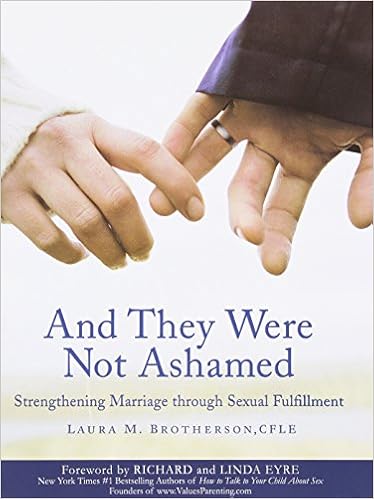
And They Were Not Ashamed - Laura M. Brotherson
If you only read one book on marriage and intimacy, it should be this one.  Physical, emotional and spiritual intimacy are covered in detail, accurately portraying both male and female perspectives.  Each chapter has exercises that are relevant and helpful.  The teachings of latter-day prophets and apostles are prominently featured in the text and the content is harmonious with the moral standards taught by the church. 

For my wife, it was very helpful to hear some of the things said in this book from a woman and presented in a gospel context.  It they had come from a man she may have dismissed them as self serving, and if they came from a non-Mormon she would be tempted to write it off as the way of the world.  It also covers how to raise children so they are better prepared for marriage.  Likewise it was a great help to me in understanding my wife's feelings on several fronts.

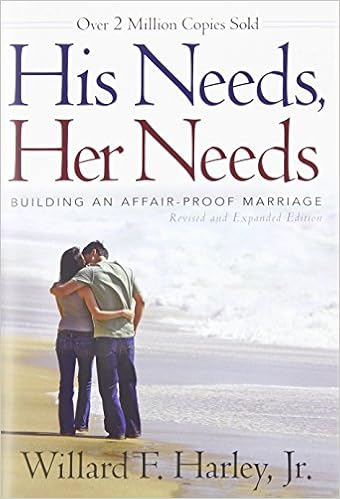
His Needs, Her Needs - Willard F. Jr. Harley
This book details the top five relationship needs for men, and the top five relationship needs for women and teaches spouses how strengthen a marriage by satisfying those needs for their partner.  While it does generalize about men's and women's needs, it is an excellent starting place for a couple to discuss and learn more about each other.


The 5 Love Languages - Gary Chapman
Just because you feel love for your spouse doesn't mean your spouse feels loved.  All of us have a set of internal 'rules' that govern what looks like an expression of love to us and what doesn't.  This book lays our those rules in terms of 'languages' or ways we express love.  For a spouse to feel loved, their partner must express their love in the language their spouse understands.  While it also is a generalization, it is a useful framework for a couple to use in teaching each other how to show their love for each other.

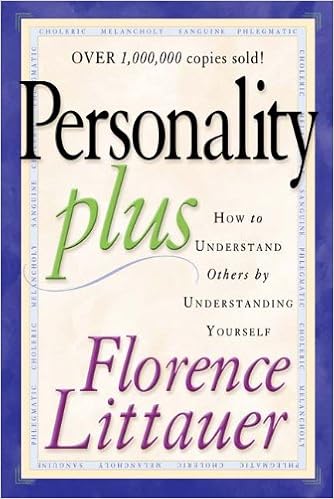
Personality Plus - Florence Littauer
While this book is not specifically about the marriage relationship, it is certainly helpful in building a stronger marriage.  In this book the characteristics, strengths, and weaknesses of 4 basic personality types are discussed, along with how the different types relate with each other.  Having a better understanding of your spouse's innate personality traits helps reduce personality conflicts, and the same skills are useful in dealing with children, co-workers, people at church etc.


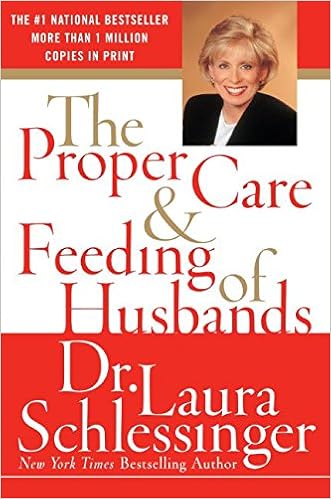
The Proper Care and Feeding of Husbands - Laura Schlessinger
One of the joys of marriage is to have somebody who is so different from you in so many ways love you in spite of those difference, but sometimes those same things make it hard to understand each other and lead to frustration.  Society also projects an image of marriage that often leads women to treat their husbands in ways that are counterproductive.  Dr. Laura takes on the task of helping wives to understand their husbands and work with them in her typical, no-holds-barred style.


There are of course other books that are worthwhile, but these 4 should be at the top of the list for most couples.  It works best if both spouses read them, and that can even be a date night thing, but even if they are read by only one spouse they will be beneficial.

We hold that the glory of God is intelligence, and the church stresses life long learning.  Certainly God is perfectly knowledgeable in this area.  It may mean stepping out of your comfort zone as it did for me, but the blessings of learning the skills of marriage may be result in the greatest blessings of your life.

Sunday, 7 February 2016

Fight For Your Marriage Part 4: Delivery

Read Part 1,  Part 2 and Part 3  first if you haven't yet.  

Now comes the hard part.  Actually bringing up the topic and delivering the message you need to send.  There are a number of different options and you will have to make a judgement call on what works best.  You may find your first choice to be not as effective as you hoped and switch to something else, but don't stop trying.

Just remember that you must not make them feel accused, blamed, judged, or threatened with any kind of consequence.  The objective is to develop mutual understanding so mutually satisfying solution can be found.  You two are a team, not opponents.

Rhetorical Tools

There are a few rhetorical tools that will help to get your message across in a positive way.  These can be used no matter what method is use to communicate.  These tools are:

Feel Statements
Anytime you feel inclined to make an accusation or lay blame, change it to a feel statement.  A feel statement describes the effect on you that their behaviour has.  For example:

"When you refuse to be intimate with me saying you are too tired, and then spend the next hour watching TV, I feel like you were not honest with me, avoiding me, and don't care how I feel."

That sounds a lot better than saying "You lie to me to avoid being intimate with me and don't care how I feel".  With a feel statement the only objection they can make is to claim they don't recall doing such a thing.  You may need to remind them of specifics.  

With an accusation you create a confrontation and force them to go on the defensive which will make it a lot harder to make progress.  A feel statement gives them an opening to explain what their thinking is, what their motives and reasons are.  When they do that it could drastically change your perspective, or make them aware of how their actions are impacting you.

Emotional Word Pictures
Emotional word pictures are a very useful way to help somebody relate to the feelings you have about something by comparing it to an emotional situation they already relate to.  You paint for them a picture with your words that evokes in them the emotions you want them to connect with what you are trying to explain to them.  To do that you need to know them well enough to know what kind of situation would have that kind of impact on them (even though it may not have that kind of emotional impact on you).

Say for example your spouse just can't understand why being refused for sex causes you to feel hurt (after all, it wouldn't hurt their feelings), but they have a great empathy for the feelings of little children.  You could say something like:

"Imagine you are a 2 year old and it's Sunday and you've been in Nursery for 2 hours.  You mother comes into the room and you are so happy to see her you run to her to give her a big hug, but she steps back and puts out her hand to stop you and says she doesn't feel like being hugged.  How do you think that child would feel, how do you think that child would feel if that happened a lot of the time?  That is like how I feel when you refuse my advances.'

By setting up a situation they relate to on an emotional level, then comparing it to a similar situation they don't relate to, they can come to understand things from your perspective better.

Questions
Once on my mission my companion knocked on a door and woman answered and  quickly turned us down, saying she was Catholic.  I suddenly asked her why she was a Catholic.  I hadn't planned on doing anything like that, the question just came out.  I felt I had been rude but she took the question seriously and hesitantly replied it was probably because she was raised Catholic.  I then asked (again without having planned to do this) if that was a good reason to be Catholic or not.  I could tell this was a question she had never asked herself, and after a pause she said it wasn't.  We invited her again to hear our message and although she turned us down again, you could tell it was because she needed time to think about our exchange.  Perhaps later on other missionaries got to teach her.

Questions are powerful tools you can use to get your spouse to look inside themselves and figure out what their own motives, beliefs and objectives that create their behaviour.  A lot of what they do may be nothing more than an unthinking habit, like that woman's Catholic faith.  Questions like:  What do you gain from that behaviour?  How would you feel if you acted this way instead?  What do you think needs to change? can get them to look inside themselves and open up to you.  Be sure to ask yourself the same kinds of questions.

Repetition
When there is something that is hard to wrap your head around, you need to hear it a few times before you really get it.  The mind has patterns of thinking about things that can be like a mental rut.  Even if someone manages to get out of the rut after a conversation, they can easily slip back into the same rut the next day.  It takes time and repetition to replace an old rut with a better rut.  It takes time and repetition to replace an old rut with a better rut.

Methods of Communication

Different methods of communication have different levels of 'richness' to them.  For example, written communication doesn't convey facial expression, tone of voice, or the emotion of the writer as easily as a face to face conversation does, so it doesn't have the richness of the a live conversation.  There are benefits and drawbacks with every method.  We'll start with the least rich methods and work our way up the scale.

Texts
Texting is a great way to send a short, quick message of affection, praise or gratitude to your spouse.  It is a terrible way of trying to explain complex emotions and work through challenges, don't even try to use it for that, but do send your spouse texts that affirm your feelings for them or uplift them in other ways.  It can also be used to set up a time later on for a conversation, chat or call.

There is nothing wrong with sending your spouse highly erotic texts, including photos or videos of a sexual nature if you dare, as long as you know your spouse will respond positively to them.  If you do this I would strongly recommend that you use one of the many apps out there for couples that helps to ensure the privacy of your messages and also helps prevent anything accidentally being sent to the wrong person. 

Email / Written letter
The written word can be an extremely effective communication tool and you may want to consider it as the first option to try.  You can take as much time as you need to compose your message and put lots of thought and prayer into how you phrase things.  You can make sure you hit all the points you want to hit and don't have to worry about being sidetracked by a remark from your spouse.  You can sleep on it after writing it, pray for guidance in writing it and for and confirmation that it is ready before you send it.  Your spouse can read it on their schedule and take time to think about things before either sending a reply or having a conversation.  This can all help keep things from getting out of hand emotionally and it makes it much easier to avoid or handle passive aggressive behaviors like denial,  blame shifting, revising history, guilt trips, and avoidance.

On the downside, sometimes the depth of emotion doesn't come across in the written word, likewise for humor or sarcasm or just the tone of the message.  Words can be misunderstood, mail could be ignored and left unread.  You may get a reply that is a emotional reaction rather than the result of thoughtful consideration. 

For some people, a handwritten letter caries more weight than a typed letter or email.  If you are giving them a written letter, it may be best to deliver it in person, and ask them face to face to read it and get back to you after thinking about it, and follow up in a few days asking if they have read it yet.

Online Chat
Online chats are a bit better than texting or sending mail as you get quicker feedback, but it is still a written form of communication and prone to the same weaknesses as letters and texting.  On top of that, while you can take a bit of time to think about your response to something, you can't take too long.  I it also more prone the the challenges that come with a face to face conversation.  You might as well go with a phone call or face to face conversation.

Phone / Video Call
A phone or video call is nearly the same as a face to face conversation, both in terms of advantages and challenges.  It is still preferable in most cases for there to physical proximity though.  If talking face to face, or waiting until it's possible to get together to do that is not practical, or if you feel unsafe having these kinds of discussion in the physical presence of your spouse than this is a good substitute for getting together.

Face to Face Conversation
This is the richest form of communication, and also the most challenging.  You won't be able to avoid it however, at some point you are going to have a heart to heart talk with your spouse.

Obviously this should happen in a private setting where there is ample time to talk.  In the evening together in the bedroom works for most people.  You can use physical touch to help keep the situation calmer.  Cuddle up to your spouse, or hold them, or just hold their hand.  Physical contact releases the bonding hormone Oxytocin putting you both in a better frame of mind for such a conversation.  Starting with a prayer wouldn't hurt either.

You need to think through what you are going to say ahead of time, have a plan.  Be prepared with the messages you intend to deliver and for likely objections.  If you need to, you can make some point form notes to cover but it may work better if you can avoid that.  You will need to open up to your spouse and don't be afraid to let you feelings show a bit. Saying something hurts you but looking like everything is fine can undermine the message.  Don't exaggerate or fake anything though, and don't let your emotions get in way of delivering your message.

Don't leave them feeling like they've been taken to the woodshed.  Express your love, appreciation, desire and respect for them and be sure to frame the conversation as the two of you working together on a common goal.  You need their help, they need yours. Express your needs as simple statements of fact, not demands or expectations.

In spite of your best efforts, the conversation may reach a point where there is contention and things are too heated.  Or it may just be going on for too long.  You may have to end the conversation for a time, and either go back to it later (the next night or soon after) or change methods and write them a letter instead.  In some cases it may be helpful to have such conversations in the presence of a professional marriage counselor who can help keep things on track and defuse harsh emotions so the conversation can continue to be productive.

One of the hardest things about having a face to face conversation is how easily the discussion can get sidetracked or bogged down in side issues.  If your spouse is bringing up concerns, don't shut them down to plow ahead with what you want to say, but don't let the conversation drift into unproductive areas. 

Your spouse may react in a defensive way, denying there is a problem or denying their acted in certain ways.  They may try to shift the blame to you, saying that their misbehavior is a result of something you did wrong.  They might claim events happened in a different way than you recall, or try to make you feel guilty for hurting their feelings by starting such conversation.

It can be hard to not get distracted by any of these and it may take some practice.  Don't apologize for trying to make your marriage better, don't apologize for seeking mutual sexual fulfillment (it is a righteous desire after all)  or for taking on the emotionally difficult task of addressing the issues rather than risk the marriage by ignoring them.  Do apologize for anything you've done that has contributed to the problem, but don't accept it as an excuse for their actions.  Be clear in your mind about past events.  You may need to point out (with kindness) when the same kinds of things happen again in the moment it happens if they have trouble believing they acted as you described.

Something else that may come up is them claiming they have a need to not fulfill your need.  If that happens, dig deeper.  What is it about your need that makes it something they feel they need to avoid?  If they went and fulfilled your need what would the cost be to them?  If you can get below the surface you can find the real need.  For example:

    Wife:  I need to limit having sex to once a week at most.

    Husband:  If we had sex 3 times in a week, how would that affect you negatively?

    Wife:  I would lose too much sleep and be tired all the time.  I usually don't orgasm so you leave me all wound up and I can't get to sleep for hours after and it is so frustrating.

    Husband:  If we had sex three times a week and you had an orgasm each time so you slept well, would there be a problem.

    Wife:  No, that would be great, but it doesn't happen like that.

    Husband:  Would you be willing to look for a way to make it like that?  I would love to give you orgasms every time.  Can you help me give you that?

The same situation could have a variety of causes, her issue could have been that having sex gave her needless feeling of guilt, or was physically painful, or doing it that often was something she considered being carnal, or some other reason.  The point is to get down to what is really needed.  The same goes for all needs, for both of you, look deep inside and see what is driving those needs, then you are in a position to find solutions you are both happy with.

Lastly, understand that this is not a one time thing, it is a long term project.  It will take several conversations before things start change.  You'll likely have to address the same concerns and objections a number of times.  As long as there is positive communication, there is progress being made.  The hardest part is at the beginning.  Once there is some progress it will fuel the desire and faith to go further.  But even after you reach the point where your intimate life is wonderful, you will both still have to fight for your marriage, but by then you'll have learned to fight together and that makes a world of difference.

Sunday, 24 January 2016

Fight For Your Marriage Part 3: More Messages

Read Part 1  and Part 2  first if you haven't yet.  

There is little point talking with your spouse about improving the marriage sexually if they do not see any benefit in it. So before proceeding to send the messages below, make sure you have addressed any pushback from the first set of messages.  Your spouse doesn't need to be fully convinced on every point before proceeding, but they do need to have a level of hope that a better marriage is possible and desirable. As Alma taught, hope can lead to faith enough to try, and by trying one can come to know that something is good.

Message 5:  You are willing to make changes that will improve the marriage.

Pushback:  You change your need for sex.

Think you are the perfect spouse?  You are not.  There are things you do, or things you have done in the past, that contribute to the current situation.

If your spouse sees this effort to improve the marriage as you putting all the blame on them and only requiring them to make changes to suit you, then you can expect a lot of resistance and defensiveness.  Accept that you will need to make changes too, even if right now you have no idea what those changes need to be.

We look at our spouse's actions through the lens of our past experience, and they do the same with us.  This can cause words and actions to be misunderstood, we can wrongly attribute motives to their actions because we assume they have the kind of motives would cause us to do those things. 

Often we need our spouse to point out areas where we harm intimacy in our marriage.  Is there something in how we attempt to initiate intimacy that is offensive to them?  Is there something important to them we are failing to take into consideration?  Is there some past hurt we have not done enough to heal?  Talk with your spouse, find out what is going on in their head and heart as best you can to see where you need to improve.

Don't be surprised if their feelings about some things are very different from yours, and don't assume that since they don't feel the same as you that they are somehow wrong to feel that way.  They have their reasons and you don't get to decide how somebody feels.  You can try to come to understand why they feel that way if you keep talking, and you can share with them why you feel as you do.  When there is better understanding, it is easier to know what changes should be made.


Not all changes are for the better however.  A typical defensive reaction is having your spouse say that if you are willing to change, then change your desire for more sex and stop bothering them about this.  Not only is this unfeasible on the biological level (at least, not without physical or chemical mutilation), it is also a request to accommodate something contrary to God's intentions for a married couple. 

The yardstick for sorting out a good change from a bad change is fairly straightforward.  Any change  that brings you and your spouse closer to each other and closer to God is good.  Any change that seeks to accommodate separation or holding on to unChristlike characteristics rather than overcoming them is not a good change to make.


Related Post: Facing the need to change


Message 6:  There are beneficial changes they can make.

Pushback:   You are never satisfied / it is too much, so why try?

Chances are you have some specific changes that you feel would greatly improve your marriage if your spouse would make them.  Just as you may need your spouse to tell you where you can improve, you need to tell your spouse where you would like them to change.

Doing this in an accusatory or demanding way will be very counterproductive.  You don't want to make this into a case of you verses your spouse.  Rather than resort to blame and accusatory remarks, help your spouse see the situation through your eyes by using feel statements.  Feel statement are not about your spouse, they are about you, how you react to certain things.  For example:

  • When I want to make love with you but you refuse me to watch TV instead it makes me feel very unloved because you put a TV show ahead of me.
  • If you would read this book I feel it would really help improve our relationship.
  • If we made love more often I feel we would both be a lot happier together.
  • When you won't come to counseling with me I feel like you don't care if our marriage survives or not.
In the course of doing this you might learn that they have motives you never considered, and that may change the direction of the conversation, but the important point here is that if you want something to change, you can't expect them to just read your mind and know how you are feeling about their actions.

It is best to move forward a step at a time.  If a spouse feels overwhelmed by you wanting a large number of changes, or a change that take them way outside their comfort zone, then it may seem futile for them to even try.  Be sensitive to their needs, including their need to feel that you value what they already do, have faith in them, and love them for who they are now.

Related Posts: Moving towards sexual fulfillment - Part 1 - Part 2

Message 7:  Better sexual satisfaction for us will improve our relationship

Pushback:   We've been doing just fine. 

A marriage takes two people, so the quality and strength of that relationship depends on the combination of how each of them feel.  If one spouse is content with things as they are, and the other is not, there is a weakness in the relationship.  If your spouse thinks things are just fine, but you are hurting, you need to help them understand that things are not as fine as they think.


Sexual satisfaction is not the sole determining factor of a marriage's strength, but it is a major one, and as President Kimball said, most divorces boil down to a couple not getting along sexually.

When both spouses are happy with their sexual relationship there are far reaching positive effects in many other areas..  There will be less conflict, greater peace of mind, and a greater sense of closeness. Hurts become rarer and more easily healed.  Each spouse will feel more of being loved, accepted and respected and less of being tolerated, judged or marginalized.

Women tend to develop a greater ability to enjoy sex and reach orgasm, a stronger feeling of safety and security in the future of the relationship, a more active libido, and fewer body image worries.

Men tend to open up emotionally to their wife more easily, desire to spend more time together outside the bedroom, see their wife's beauty more clearly, go further out of their way to serve and please their partner, and help with housework more.

Both have a greater strength to resist sexual temptations (including pornography), more confidence, do better in their careers, endure trials with greater faith and patience, feel greater gratitude to God and each other, feel greater joy overall, are more likely to keep temple covenants, and truly want to be together for eternity.  Children are more likely to have successful marriages of their own as adults.

 'Fine' is a low standard compared to what a couple can enjoy together.


Related Post: Magical Thinking

Message 8:  Refusing to address this puts the marriage at risk.

Pushback:   You are exaggerating.

Hopefully, you won't need to make this point, but if if you do, do not make it sound even remotely like some kind of threat to leave if they don't co-operate.  You must come at this from the position of being concerned about the future of the marriage so you are seeking to work together with your spouse to make sure things never get that bad.

How bad can it get?  Just imagine the opposite of the blessings listed above.  A home filled with conflict, a lack of peace of mind, feeling disconnected emotionally from each other, hurts that just pile up, feeling your spouse only tolerates you, judges you harshly, and doesn't care about your feelings.  Women tend to shut down sexually, fear divorce is coming, feel ugly and depressed.  Men close up emotionally, avoid being around their wife and bury themselves in other pursuits.  Both are more vulnerable to temptation, struggle more spiritually, and question if they actually want to be together forever.

It is a dark, lonely, depressing, sad place for a marriage to be.  If yours is already there it is not too late, but it will likely require some professional counseling to climb out of that hole.

If your marriage is not at that point, and your spouse is content with things as they are, they may need you to gently show them how the marriage looks through your eyes.  Are some of those negative outcomes listed above already present, or do you feel some of them could come about in the short term?  It might really shake them up to come to realize the situation, they might go into denial for a time, but always take the stance of trying to enlist their help rather than blame them.  The sooner you change course the easier it will be, and the longer you'll have to enjoy the blessings.  Don't make the mistake of thinking things will somehow change on their own.  Fight for your marriage.


Related Post: Is sex really that important?


Now that you've prepared yourself, and know what message you need to send and what kind of pushback to expect, the last thing to cover is how best to send these messages to your spouse.  We will cover that in the next post.
---

Monday, 18 May 2015

Fight For Your Marriage Part 1: Preparation

The comments on my previous post reminded me of the time I started seeking to improve my marriage.  It also reminded me of conversations I've had with a friend in a similar situation years later, and many posts and comments I've seen in other marriage blogs and discussion boards.

In all these cases one spouse realized that their marriage needed to improve in the area of intimacy, and the other spouse was pushing back and opposed to the very idea.  Either somebody had to fight for their marriage to make it better, or just give up and accept things as they were and hope the hurt and disappointment didn't turn to resentment and anger, or lead to worse consequences.

I believe that fighting for your marriage is the right thing to do, and this blog is mostly about doing just that. I've talked about individual pieces of what fighting for your marriage includes but now I feel it's time to pull it together.  Although this is written from the perspective of resolving intimacy issues in the marriage, the same principles apply to other situations with a little adaption.

If you are in this situation and ready to fight for a better marriage than you have now, then you should first prepare yourself in these areas:

Vision
You need a vision of what your marriage could and should be.  I don't mean a dramatic revelation from God, but you need a picture in your head of what it is you want to work towards.  Chances are your spouse has a picture of that in their head too.  They may be as unhappy about things as you, just for different reasons.  The challenge will be to find a picture you agree on, then make it a reality as much as possible.  For now you need to start off with clarifying a picture of your own.

Faith
Joseph Smith said in Lectures on Faith that "it is faith, and faith only, which is the moving cause of all action".  Fighting for your marriage will not be easy.  There will be emotional pain, tears, frustration.  If you do not have faith that it will lead to something better you will not put in enough effort to accomplish what you want.  You need faith that God will help you, and faith that there is a way to move towards your vision.

Know who the enemy is... and is not
It's sometimes easy to see your spouse as the cause of hurt and pain then cast them as the enemy.  That isn't reality however, Satan is the enemy, and what better way can he destroy a marriage than to get spouses to see each other as the villain and forget about him?

Your spouse is your team mate.  They may not be as much of an asset to the team as they could be, but the same could probably be said for you as well.  The point is you can't go into this with the idea of 'defeating' your spouse.  You either win together or you lose together.

Part of your objective is to find a way to work together as a team.  If you are attacking them, criticizing them, complaining, and rubbing their face in their perceived failures, whey would they want to be on the same team as you?

Joseph Smith wrote in a letter to the Church:
No power or influence can or ought to be maintained by virtue of the priesthood, only by persuasion, by long-suffering, by gentleness and meekness, and by love unfeigned; By kindness, and pure knowledge, which shall greatly enlarge the soul without hypocrisy, and without guile— (D&C 121:41-42)
Note that he didn't just say it was a bad idea, he said that you can not maintain any kind of influence in somebody's life through authoritarian means.  It is impossible in the long run.  Seeing your spouse as your team mate rather than your enemy will help you treat them as those verses outline.  Fight the real enemy instead.

Related posts

Live the gospel 
The best way to fight Satan is to live the gospel as best you can.  That's right, go to church (and the temple), read the scriptures, pray and keep the commandments.  Don't brush that off as trite or simplistic.  A wise Bishop of mine once said that other than receiving ordinances like the sacrament, the purpose of any church meeting is to receive revelation, those quiet whispers of the Spirit reminding us of something we should do.  It can also happen while read the scriptures, but if our lives our out of harmony with the gospel we block God's inspiration.

You can not change somebody's heart, but God can.  You need His help and His inspiration.  Through faith and righteousness you can draw on the powers of heaven and gain access to the gifts of the Spirit.  Living the gospel will also increase your faith and your capacity to love.

When you pray, don't pray like you are leaving a voice mail message for God.  Talk with Him, tell him not just what you want but why you want it.  Tell him what you plan to do, how you feel and what made you feel that way.  Don't tell him what you think He wants you to say, say what you really mean, and even cry on His shoulder.  Plead your case.  He knows what you are feeling, He won't rob you of the growth you get from overcoming by giving you some instant fix, but He will help. 

Un-Christlike behaviour and attitudes are at the root of all relationship issues.  The more Christlike you can become, the better off your marriage is even if nothing else changes.

Related posts


Have righteous motives
When your spouse pushes back, one thing they may do is call your motives into question.  You need to make sure your motives are well thought out and in harmony with the gospel so you are ready to answer such accusations by clearly explaining why you are pursuing this.

Don't just focus on the external and immediate pain point. If you frame your objective as having sex more often with your spouse, you may want to re-think that.  That only looks at what you want, with no consideration for your spouse's feelings or needs.  Your spouse will sense you ulterior, selfish motive and refuse to co-operate, or pursue a selfish motive of their own to further limit intimacy with no regard for your feelings.  Each one is as bad as the other.

In theory you could have sex more often by resorting to bullying and manipulation but would that get you the kind of marriage you want?  No, and in the long run I expect you would find yourself alone if you did that. Having sex more often should not be the objective, the objective should be to have a mutually happy and fulfilling relationship.  One where you each have leaned how to find real joy in meeting each others needs.  An increase in sexual intimacy is only a side effect and the sexual relationship is only a portion of what makes a marriage happy and fulfilling for both spouses.

Related posts


Ground yourself in sound doctrine
Another area where push back occurs is over basic ideas and beliefs about sexuality.  You may have to push back against ideas like sex is a necessary evil, or intended only for reproduction, or that sexual desire for one's spouse is not in keeping with church standards, or having sex often is carnal, or that sexual desire is lust or that sex should not be that important.

It is important that you don't buy into such false ideas, or you will find yourself hard pressed to help your spouse overcome them.  Get it firmly settled in your heart that sex is a wonderful and divine gift from God and he is fully approving of married couples being intimate and enjoying, often.  There are many quotes from various General Authorities along those lines.

Some true teachings are misunderstood.  Passions are to be bridled, but sometimes that message is taken as they are to be repressed.  To bridal one's passions means they are harnessed so they can put to good use.  Never buy into the idea that you are somehow in the wrong to feel a desire for intimacy with your spouse.  Feeling sexual desire only becomes carnal or lustful if one puts their gratification above obedience to God.  The desire a spouse feels for their partner is neither carnal or lustful since it is a desire to do something righteous.  It is also an emotion God planted in the hearts of mankind to bring men and women together to be one flesh.  God command Adam and Eve to cleave to each other, not push each other away.

Related posts


Have realistic objectives  
Perfection is not going to happen in this world.  Our spouse won't be perfect, we won't be perfect, and our circumstances won't be perfect either.  Our objectives need to be realistic and this is an area where it is best to keep objectives vague and not attach an artificial deadline to them.  Feeling pressured destroys intimacy and can backfire by creating resentment and frustration and a lack of co-operation.  It is not a race, if things are moving in the right direction, be happy about it.  If they are not moving in the right direction, don't make it worse by over reacting.

There are a number of circumstances that will slow progress.  Negative emotions resulting from past sexual sins, growing up in a sex-negative home environment, and wrong teaching by well meaning local church leaders are things that can be dealt with but they can take some time.  Mental illness, other medical conditions, past sexual abuse or other traumatic experiences can be much harder to overcome, and might never be fully overcome in mortality.

They may take your effort to change things as a way of you saying you don't love them as they are and need to be reassured that you are trying to change things because you love them, not because you need them to change for you to love them.

Courage
How many times have you heard that contention is of the devil?  Probably a lot.  Let's take a closer look at that scripture:

For verily, verily I say unto you, he that hath the spirit of contention is not of me, but is of the devil, who is the father of contention, and he stirreth up the hearts of men to contend with anger, one with another. (3 Nephi 11:29)
To me, a 'spirit of contention' is an attitude of looking for a fight, taking offense easily, and acting out in anger.  It is not like what Jude said when he told the early Christians to 'earnestly contend for the faith' (Jude 1:3).

You can not fight for your marriage without running into disagreements with your spouse, and having your spouse object and push back.  There will be times where you need to push back against what they say and stand your ground with courage, but you need to be able to 'earnestly contend', not 'contend with anger'.   No name calling, no lashing out.  Even with your deepest disagreements you need to remember that 'A soft answer turneth away wrath: but grievous words stir up anger.' (Prov 15:1)

If you feel yourself getting angry, shelve the topic for another time.  If you tend toward the other end of the scale and avoid conflict even when you should not, you need to steel yourself for those moments where you have to take a stand.

Related posts


Humility 
It is easy to see how our partner needs to change, and also easy to be blind to how we need to change.  Are you being the best spouse you can be?  Are you meeting your husband's or wife's relationship needs well?  How do you know what their needs are?  Just because you are doing things the way you would like them done for you doesn't mean you are doing them the way your spouse needs them done. 

This isn't about 'fixing them' and if they feel it is that will lead them to push back.  It has to be about improving the marriage.  It is pretty rare for only one spouse to need to change to improve a marriage, so be prepared to listen and learn what you need to do for them.  Set the example by not pushing back and resisting change, even if they do.  Invite your spouse to help you become better and they won't feel like this is a one way street.

Related posts

Persistence and patience
Deeply engrained ideas can take time to change, especially when there are deep emotions that go with them.  Don't expect one brilliantly worded speech to change much.  You are going to have to repeat yourself several times, refute the same objections again and again before an old paradigm is replaced with a new one.  Don't get frustrated, just calmly and peacefully address the concern again.  Exercise faith that things will change and continue to pray for help and guidance.  Remember the parable of the unjust judge.

Charity and forgiveness
Last but not least, you must have charity towards your spouse.  1Cor 13:4-7 has a lot to say of charity.  It suffereth long and is kind.  It keeps one from 'acting unseemly' (lashing out, slamming doors, other immature and destructive behaviors).  A charitable person does not selfishly seek for just their own satisfaction without regard for others, doesn't take offense easily, and don't assume the worst of others.  In fact the key to being charitable is to assume the best, and not attribute to malice what can be explained by ignorance or something else.

You also must not hold a grudge over any past offense.  If you do that you will not be able to do the things above. Forgiving somebody doesn't mean you pretend it never happened, it doesn't mean you don't still hurt over it, it doesn't mean you must extend the same trust as before, but it does mean that you let go of any desire for payback, any hostility toward the other person. 

To restore a relationship fully requires both forgiveness and reconciliation.  Forgiveness is something an offended person can give no matter what the offender does or does not do, but for there to be reconciliation the offender needs to act to fix what they broke.  That would include recognizing their error, feeling genuine regret for it that matches the seriousness of the offense, making a full confession, asking for forgiveness, making restitution and not doing it again.  The same steps we take when we reconcile ourselves to God through repentance.

That a lot of preparation, but you must start with that.  Next we'll discuss things you can do and how to do them.
----