Sunday, 6 November 2016

A Woman's Guide To Talking Sexy

Just as most women want their husband to be able to open up and talk about his feelings, most husbands would love to hear their wife open up to them about her sexual thoughts, feelings, and desires.  And just as talking about feelings is often a learned skill for men, sexy talk is often something that a woman needs to work at developing.

Give Yourself Permission
The first step is to give yourself permission.  For many the biggest hurdle to overcome is the idea that a proper Mormon wife just wouldn't talk like that.  It isn't classy, it isn't lady-like, it's dirty.  This isn't about being a lady, this is about being a woman, his woman.  You are his wife, and your sexuality is not 'dirty' or shameful or low-class.  If talking sexily stretches you to the edge of your comfort zone, keep in mind that you are not just allowed, but commanded to be intimate with your husband, so why would it be wrong to think or speak with your husband about something you are allowed to actually do together? 

As his wife, it is perfectly OK for you to have sexual thoughts about your husband, to bask in the feeling of desire for him and linger on sexual fantasies staring the two of you.  It is also perfectly OK to talk with your husband erotically, sharing such thoughts and feelings with him and express in very detailed and clear terms what you like, want, and hope for.  You can and should express gratitude and appreciation for his sexual nature and for what sexual fulfillment he give you.

Be Honest and Sincere
Any intimate conversation should be about sharing how you really feel, not about saying whatever words will produce the reaction you want, true or not.  Don't be a tease who winds up her man saying things that don't reflect how she actually feels.  It's only fun until somebody gets hurt.

If you have trouble thinking and feeling that way about your husband, make the effort to work past that.  If there are unresolved conflicts or hurts that are getting in the way, focus on taking care of those first.  If you have not been able to give yourself permission to think and feel that way about him, work on that, even pray for it.

Get Comfortable With Sexy Words
You need to develop some comfort using erotic words and language.  Innuendo is great, but so is a clear, direct statement.  There are many proper and slang expressions that refer to male and female intimate body parts.  Those that are disrespectful or offensive to your spouse should not be used, but the rest are fair game if both you and your husband are comfortable with them.  Likewise there are other words and phrases that in one context would be cursing, but in another context are just accurate, emotional expressions.

If you have not done much of this before there can be a lot of discomfort saying something even when it is only slightly erotic, but practice builds confidence.  A letter, text or email may be an easier way to start, or memorize some specific things to say in advance and practice saying them in your head and out loud when nobody is around.  Another option may be to make a video or audio recording to send to your spouse, but be sure it will stay private.  When you feel ready, you can talk sexily to him face to face when alone together, or quietly whisper something in his ear when out in public, even at church.  It defiantly should be part of your foreplay, and afterglow.

Be Specific and Descriptive
Men's visual nature often leads them to picture in their mind the things they hear said, and sexy talk is largely about painting a mental picture for them.  The more specific and descriptive you can be, the clearer their picture will be and the greater effect it will have on them. Try to make reference to specific actions, feelings, settings, events, and body parts rather than 'safe' generic or general terms.

Make use of adjectives to bring detail to the items you are mentioning.  It helps clarify the picture and also helps your husband to see things as you see them.  He may be surprised to hear how he looks in your eyes.  Adjectives should be liberally used to describe anything you mention when talking sexily to your husband, the location, clothing, furniture, weather, whatever.  The clearer you make the picture the better

Likewise, adverbs clarify the action and turn the picture into a movie.  Rather than paint a picture, you can play out the best love scene ever inside their head featuring the two of you.

One thing to avoid is saying the same things the same way so often that they become vain repetitions in the ears of your husband.

Examples
Consider the following examples which express the same idea but with increasing levels of specifics and description:

I love it when you hug me
I really love long hugs with you.
I really love being held for a while in your arms.
My heart still skips a beat when you take me in your strong arms and hold me tight against you like you want to hold me forever.

Can you see how expanding the simple remarks makes it a more powerful expression of love and desire?  If that last one is too over the top for you, that's OK, just recognize the power behind being very clear.

Obviously I'm not going to give examples relating to acts far more intimate than a hug, but you can come up with those yourself.  If you ever did Mad Libs, you may find that kind of approach helpful (filling in the blanks yourself, not asking others to provide the missing words).  Try this one:

I <adverb> <verb> every time your <adjective>, <adjective> <noun> <plural verb> my <adjective> <noun>.

Don't worry about feeling awkward at the start.  Men are not big drama critics and are likely to be so thrilled to see your sexual confidence and desire that they won't have any complaints at all.  The small amount of time it takes to move forward on this will pay off quickly, and you may just find that it gets your motor running a bit too.

Sunday, 23 October 2016

A Man's Guide to Talking About His Feelings

The old stereotype that men really don't want to talk about their feelings exists for a reason.  It isn't that men don't have feelings, in fact I think in many cases men have far more powerful emotions than women do.  Powerful enough to lead a man into self defeating or even destructive behaviour under some circumstances.  The problem doesn't lie in feeling feelings, the challenge for many of us men is in translating feelings into words, and biology is not on our side.

The human mind is divided into two hemisphere's, left and right.  Each hemisphere has it's own area of specialty.  For example, the left side is used for logic, math, language, calculating.  If you are thinking in words, that is your left brain at work.  Conversely, the right brain is used for imagination, creativity, intuition, emotions and non-verbal communications.


So, emotions arise in the right brain, but to fashion them into words is the job of the left brain.  Now this is the same for both men and women, but the difference is that women are highly connected across the left and right brain compared to men.  They are able to transfer data between each side much faster and that enables them to talk about their feelings with much greater ease.  For men it is easier to keep all that on the right side, express our emotions in actions and other non-verbal communications.

There is also some cultural pressure on men to keep their feelings to themselves.  Many men subconsciously feel they are in constant state of competition.  We are uncomfortable exposing any weakness fearing others will use them against us, or feel it will make us less masculine.  We shun making ourselves vulnerable but that is exactly what is required of us in order to talk about our feelings.

None of means that that men can't talk about their feelings, but it does mean it is a skill that needs to be deliberately acquired. Here are suggestions that may help.

Take Time
Imagine you are driving along, and some really great song you never heard before comes on the radio.  After the song was over, would you be able to write out the sheet music for it?  Probably not.  If you wanted to do that you would have to go over it multiple times, in small parts, listening again and again to the same stanzas before moving on to the next.  In the end you likely would have a close but imperfect version of the song.

This is a lot like the process of turning feelings into words.  It takes time, we need to go over in our heads multiple times what we feel (several emotions can arise all together) what caused those feelings, and perhaps hardest of all: why those particular emotions were provoked by whatever stimulated them.  Introspection is a skill gained by doing it, and it is a skill that is needed to overcome the natural man.  While we may not perfectly convey our feelings in words, we can get close.


Negative emotions often push us to act rashly, and many an unkind word or deed has resulted from that (followed by hurt and regret).  It is better to remain quiet and work out how to talk about whatever happened than to lash out.  If we feel it may take us a while to master our emotions and distill them into words, we may want to tell our spouse that this is something we'll need to have a conversation about later.  It is also a bad thing for a relationship to never talk about it, bury the feelings and allow resentment and hurt and anger to fester in the dark.

Positive emotions are easier to deal with since your spouse likely will react very favorably.  There is still a lot of value in taking time to look inward and examine the source of those feelings and find a way to express them verbally.

Use The Written Word
There are some real advantages to using the written word to express feelings.  First, it forces you to take your time and gives you the chance to go over what you say and get it as right as you can before your wife reads any of it.  Second, if you are expressing something that will bring positive emotions in your spouse, they have it to keep and read again.  Third, you are not going to be thrown off topic by some question or comment.

Break it up
You don't have to cover everything in one conversion.  Often it is easier to break it up into smaller topics and discuss each one of them individually, in separate conversations.  If a conversation is increasing anger and hurt rather than healing it, take a break and continue it the next day.

Choose The Time and Place Carefully
The nature and topic of the conversation should define the setting the conversation takes place in.  Compliments and expressions of love are acceptable in many circumstances, but resolving conflicts and discussing less than positive emotions often require a high degree of privacy.  Physical intimacy such as being held can help promote a feeling of safety and acceptance that makes it easier to open up emotionally.

Embrace Vulnerability
This is you wife you are talking with.  If you don't feel safe dropping all the walls of emotional self defense with her, then something needs to change.  If there are things happening in the marriage that create a reluctance to make yourself emotionally vulnerable, perhaps those are the first things you need to discuss.  If that is not the case then you are going to have do the brave thing and take a risk, let your soft spots show and trust that she won't knowingly go after them.  This is not going to make you any less of a man in her eyes.  It will increase your emotional intimacy, and that will likely lead to greater spiritual and physical intimacy in the relationship as well.

Ladies, be sure to cut your man some slack.  Don't expect him to instantly be like you in this area.  Give him the time he needs and be encouraging and grateful for his effort.  Don't overlook the non-verbal expressions of his feelings either.

Men, if you can master the ability to look inside at your emotions and find the words to discuss your feelings with your spouse, it will greatly bless your marriage.  On top of that you will be able to do the same in your relationship with God.  You will be able to pray like you never have before.  God gave us weaknesses so that we can overcome them and become strong in those very areas.  It is never too late to rise to the challenge.

Tuesday, 4 October 2016

Out of the best marriage books...

I've created a Facebook page for this blog.  I'll share new and past blog posts there and I'll also be posting relevant news articles with commentary and brief posts that won't be part of the blog.  If you go to the page at facebook.com/LDMarriage and Like it, then it you can have all that content show on your Facebook wall.  Please also invite others to visit and like the page, or share content from it.
---------------------

A successful marriage includes a successful sexual relationship (however the couple together would define success), but it is not realistic to expect an easy path to a mutually satisfying sexual relationship in an environment of sexual ignorance.  The mechanics of reproduction are typically not a mystery, adults know what goes where, but the art of being a skilled lover and how to manage the very emotional nature of a sexual relationship are topics many Mormons feel uncomfortable making a focus of study.


When I got engaged I was keenly aware of my ignorance in these areas and it gave me more than a little apprehension about my ability to give my bride a wedding night that would live up to her expectations.  My ignorance was a shame to me, and the prospect of somebody seeing me buy a 'sex book' or asking anybody for guidance was terrifying. 

At some point my fears overpowered my shame and I went to some out of the way bookstore I never went to before (or since) and purchased a well known book on sexuality.  While there was some useful information in it, the entire topic was treated without reverence, and the images in the book were clearly intended to be more erotic than educational (which I suppose was why it was shrink wrapped in the store).  All in all I wouldn't call it the best experience, but it got me started.

A little while later I was in an LDS Bookstore and unexpectedly came across a paperback with a blue cover that was written to help prepare ignorant virgin Mormons like myself for the sexual side of marriage.  I don't' recall the title of the book but it was small and thin enough to fit in a suit coat pocket.  I sheepishly purchased it.  The content was far more helpful and reverent towards sexuality and it left me feeling much better prepared.

While our wedding night was a success, the early years of our marriage was a time where everything was wonderful, except in the bedroom.  My wife had little desire for intimacy and it bothered me greatly.  At times I blamed myself, wondering if things would improve if I could better please her, sometimes I wondered if the problem was she no longer loved me like before.  My job downtown was in an office building that was beside a very large bookstore, and sometimes on my lunch break I would go there and try to find a book that would help fix this one sore spot in our marriage.  I still struggled with the fear of others seeing me do this since the book shelves were not high enough to hide me, but I desperately wanted our marriage to improve in this area.

Over time I've found a number of books that were helpful, and my wife likewise made an effort to learn, and found resources that were helpful to her.  I'm no longer ashamed to head into Chapter's and check out or purchase a book on marriage or sexuality.  It is Satan that wants us to feel shame over it and overcoming that is a big step forward.

As I found early on however, there are books on sexuality that treat the topic with due reverence and, and others that do not.  Below are some books that I would encourage you to consider reading:

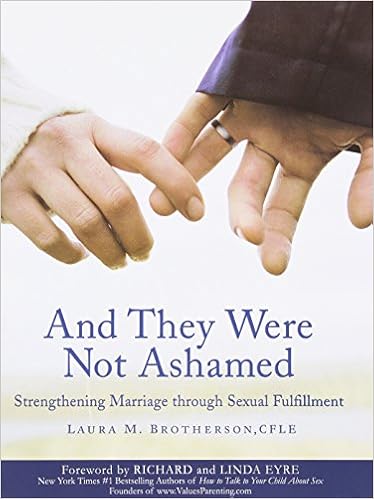
And They Were Not Ashamed - Laura M. Brotherson
If you only read one book on marriage and intimacy, it should be this one.  Physical, emotional and spiritual intimacy are covered in detail, accurately portraying both male and female perspectives.  Each chapter has exercises that are relevant and helpful.  The teachings of latter-day prophets and apostles are prominently featured in the text and the content is harmonious with the moral standards taught by the church. 

For my wife, it was very helpful to hear some of the things said in this book from a woman and presented in a gospel context.  It they had come from a man she may have dismissed them as self serving, and if they came from a non-Mormon she would be tempted to write it off as the way of the world.  It also covers how to raise children so they are better prepared for marriage.  Likewise it was a great help to me in understanding my wife's feelings on several fronts.

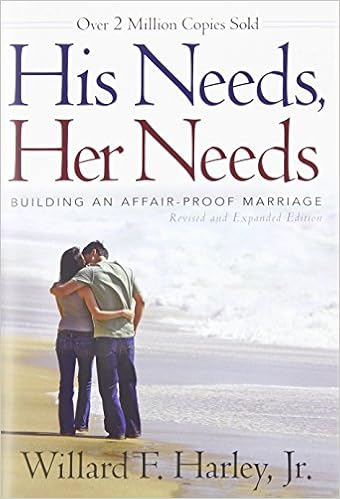
His Needs, Her Needs - Willard F. Jr. Harley
This book details the top five relationship needs for men, and the top five relationship needs for women and teaches spouses how strengthen a marriage by satisfying those needs for their partner.  While it does generalize about men's and women's needs, it is an excellent starting place for a couple to discuss and learn more about each other.


The 5 Love Languages - Gary Chapman
Just because you feel love for your spouse doesn't mean your spouse feels loved.  All of us have a set of internal 'rules' that govern what looks like an expression of love to us and what doesn't.  This book lays our those rules in terms of 'languages' or ways we express love.  For a spouse to feel loved, their partner must express their love in the language their spouse understands.  While it also is a generalization, it is a useful framework for a couple to use in teaching each other how to show their love for each other.

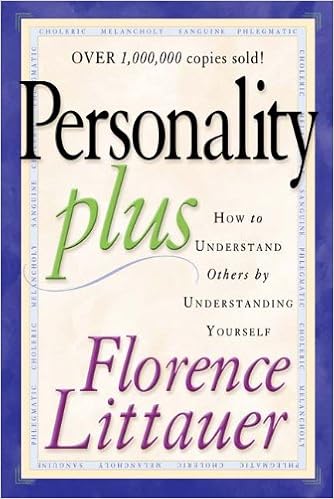
Personality Plus - Florence Littauer
While this book is not specifically about the marriage relationship, it is certainly helpful in building a stronger marriage.  In this book the characteristics, strengths, and weaknesses of 4 basic personality types are discussed, along with how the different types relate with each other.  Having a better understanding of your spouse's innate personality traits helps reduce personality conflicts, and the same skills are useful in dealing with children, co-workers, people at church etc.


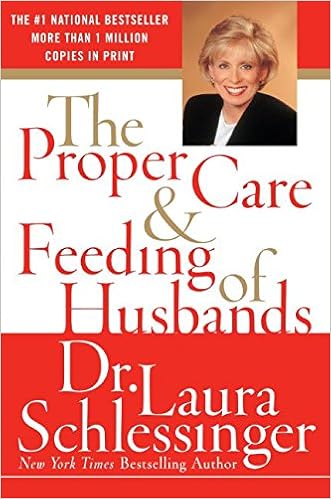
The Proper Care and Feeding of Husbands - Laura Schlessinger
One of the joys of marriage is to have somebody who is so different from you in so many ways love you in spite of those difference, but sometimes those same things make it hard to understand each other and lead to frustration.  Society also projects an image of marriage that often leads women to treat their husbands in ways that are counterproductive.  Dr. Laura takes on the task of helping wives to understand their husbands and work with them in her typical, no-holds-barred style.


There are of course other books that are worthwhile, but these 4 should be at the top of the list for most couples.  It works best if both spouses read them, and that can even be a date night thing, but even if they are read by only one spouse they will be beneficial.

We hold that the glory of God is intelligence, and the church stresses life long learning.  Certainly God is perfectly knowledgeable in this area.  It may mean stepping out of your comfort zone as it did for me, but the blessings of learning the skills of marriage may be result in the greatest blessings of your life.

Sunday, 28 August 2016

What's the word on oral sex?

This is a topic I approach knowing there is a risk of creating more heat than light.  Please keep in mind as you read this that my remarks here are my own personal understanding.  You are free to reject what I say here, and I actually hope nobody here blindly takes my word on anything I post but searches for confirmation from the highest authority.

Oral sex, both in the form of fellatio (ie: a woman orally pleasuring a man) or cunnilingus (a man orally pleasuring a woman), is nothing new.  Many Bible scholars say that Songs of Solomon 2:3 and 4:16 are alluding to oral sex, and although that book has a somewhat questionable status to us, it does at least suggest that ancient Jews and Christians were OK with the idea of oral sex.

Over the past several decades oral sex has become something talked about far more openly than in the past, and it is far more frequently referred to in popular media as a pleasurable act both men and women normally desire and even expect. It is not considered an uncommon act and I expect the percentage of married Mormons who have oral sex to be about the same as for married non-Mormons, at least among the younger generations of married couples.

There is no question that oral sex is a sexual act though, and any unmarried couple who engage in it are in violation of the law of chastity.  There is sometimes a question in the minds of some Latter-Day Saints however if this is also off limits for a married couple.

"The Letter"

In the entire history of the church, there has been one (and only one) time where oral sex has been referred to, and unfortunately that one reference was mistaken to be a doctrinal position of the church.  I believe that looking at what was said in context should lead to a different conclusion.

The document in question is a January 1982 letter from The First Presidency to all Stake, Mission, and District Presidents, plus Branch Presidents and Bishops.  The letter is two pages long and its purpose was to provide guidelines for leaders conducting worthiness interviews, not specifically to address any sexual questions.  I will not provide a link to the the letter since these days it can only be found on websites hostile toward the church, who use it to mock the church over the following part:


When interviewing married persons, the one doing the interviewing should scrupulously avoid indelicate inquiries which may be offensive to the sensibilities of those being interviewed.

Married persons should  understand that if in their marital relations they are guilty of unnatural, impure, or unholy practices, they should not enter the temple unless and until they repent and discontinue any such practice.  Husbands and wives who are aware of these requirements can determine by themselves their standing before the Lord.  All of this should be conveyed without having priesthood leaders  focus upon intimate matters which are a part of husband and wife relationships.  Skillful interviewing and counseling can occur without discussion of clinical details by placing firm responsibility on individual members of the Church to put their lives in order before exercising the privilege of entering a house of the Lord.  The First Presidency has interpreted oral sex as constituting an unnatural, impure, or unholy practice.  If a person is engaged in a practice which troubles him enough to ask about it, he should discontinue it.  (Letter from The First Presidency, Jan 5, 1982)
Unfortunately a lot of church leaders had a knee-jerk reaction that lead them asking couples what they were doing in the bedroom, and also counseling them that oral sex was a sin.  News of this reached The First Presidency and on October 15th there was another letter stating:


In conducting worthiness interviews you should follow carefully the instructions contained in our letter of January 5, 1982.  Also, you should never inquire into the personal, intimate matters involving marital relations between a man and his wife.   You should never deviate from or go beyond the specific questions contained in the temple recommend book.  If in the course of such interviews a member asks questions about the propriety of specific conduct, you should not pursue the matter but should merely suggest that if the member has enough anxiety about the propriety f the conduct to ask about it, the best course would be to discontinue it.  (Letter from The First Presidency, Oct 15, 1982)
What it means and what it doesn't

There is still the lingering belief among many that the church views oral sex as morally wrong because of these letters.  I would dispute that for the following reasons:

The first letter specifically states that their negative view on oral sex is their interpretation.  They do not claim it to be revelation, inspiration, church policy or anything other than their own interpretation.  Their interpretation is partly the product of their upbringing and cultural environment of their generation in that location. 

This was also something mentioned once in passing in a letter to certain leaders of the church and never taught to the body of the church.  Given that the church has no qualms over condemning masturbation, homosexual behaviour, fornication, immodest dress, and other socially accepted immoralities I would expect them to also be vocal about oral sex being immoral, if in fact we had some indication from God that it was.  Instead we have total silence on the question, and priesthood leaders being directed to not get into asking about it.  Even in Handbook 1 and 2 say nothing beyond what is in the second letter and I expect a great many of you reading this had never even heard of the first letter. 

Also, the first letter emphasizes that husbands and wives "can determine by themselves their standing before the Lord" and that the responsibility is on individual members.  In other words, couples are to determine between themselves and God where the boundaries should be in their relationship.  It doesn't make sense to give that instruction, then go contrary to it laying out a rule for all couples.  It does make sense however to see what they said on oral sex as an example of them following that counsel, and by so doing coming to that interpretation.  This is not a church however that is governed by the interpretations of men, and doctrine is not established by a one time opinion expressed in a letter that wasn't even to the church as a whole.  What they said deserves respectful consideration, but we are not obligated to adopt their interpretation.

So, I feel it is perfectly accurate to say that the members of The First Presidency back then held as their own view that oral sex was unnatural etc., but I do not consider it accurate at all to say that the position of the church was the same.  As far as I can tell, the church has no official position on oral sex now, and never has in the past either. 

A Definite Maybe

So, is oral sex an immoral act that every married couple should abstain from?  If you need an answer to that, you will need to seek it for yourself.  No such revelation has come to the church and I wouldn't expect it to.  If you personally feel this is something God doesn't want you to do, you need to go with that, but don't project on to God any personal inhibitions or feelings you may have about it.

Does that mean oral sex is perfectly OK for you and your spouse to do?  Perhaps, perhaps not.  It does mean however that you and your spouse should only go ahead with if you both are comfortable with doing it, and if you both feel that God is OK with you taking that path.  One couple may reach one conclusion, and another couple may reach another.  Not everything is one size fits all.

In my opinion (and I stress that this is my opinion), I do not feel it is inherently wrong within the boundaries of marriage.  God made more than one kind of tree, one kind of flower, one kind of fruit.  He gave us a world filled with variety, and likewise I don't think God requires us to limit ourselves to one form of intimacy.  For some elderly couples, people with disabilities or other conditions, oral sex may be the only form of intimacy they can enjoy.  Some women are only able to reach orgasm through oral stimulation. It fulfills the divine purpose intimacy has of bonding the husband and wife to each other.

But even without moral objections there may still be valid reasons for a couple to not include this act in their lives.  It is not unusual for somebody to be uncomfortable with the idea of oral sex for reasons that have nothing to do with morality and sin.  Hygienic concerns are common even though you expose yourself to more germs, bacteria etc. by kissing.  Body image or negative associations of oral sex with something undesirable can create inhibitions.  The idea may simply be a turn off, or it may be an act linked to past traumatic experiences they do not want to have re-triggered.

Pushing a spouse to participate in something sexual that they are not comfortable with, no matter what act it is, is abusive.  No intimate experience should pleasure one spouse at the expense of the emotional peace and well being of the other.  At the same time, choosing to overcome needless inhibition to become a better lover for your spouse is a very loving thing. 

It is also not a good thing to make one's happiness in their marriage dependent on a spouse's willingness to engage in oral sex.  Who you are intimate with is far, far more important than what form that intimacy takes, as long as there is intimacy.  A lack of oral sex may be a cause for a mild case of unsatisfied curiosity or longing, but it should never be a source of conflict in a marriage.  Don't let such a minor thing be a crack Satan can place his wedge in and hammer away at your marriage.

Sunday, 7 February 2016

Fight For Your Marriage Part 4: Delivery

Read Part 1,  Part 2 and Part 3  first if you haven't yet.  

Now comes the hard part.  Actually bringing up the topic and delivering the message you need to send.  There are a number of different options and you will have to make a judgement call on what works best.  You may find your first choice to be not as effective as you hoped and switch to something else, but don't stop trying.

Just remember that you must not make them feel accused, blamed, judged, or threatened with any kind of consequence.  The objective is to develop mutual understanding so mutually satisfying solution can be found.  You two are a team, not opponents.

Rhetorical Tools

There are a few rhetorical tools that will help to get your message across in a positive way.  These can be used no matter what method is use to communicate.  These tools are:

Feel Statements
Anytime you feel inclined to make an accusation or lay blame, change it to a feel statement.  A feel statement describes the effect on you that their behaviour has.  For example:

"When you refuse to be intimate with me saying you are too tired, and then spend the next hour watching TV, I feel like you were not honest with me, avoiding me, and don't care how I feel."

That sounds a lot better than saying "You lie to me to avoid being intimate with me and don't care how I feel".  With a feel statement the only objection they can make is to claim they don't recall doing such a thing.  You may need to remind them of specifics.  

With an accusation you create a confrontation and force them to go on the defensive which will make it a lot harder to make progress.  A feel statement gives them an opening to explain what their thinking is, what their motives and reasons are.  When they do that it could drastically change your perspective, or make them aware of how their actions are impacting you.

Emotional Word Pictures
Emotional word pictures are a very useful way to help somebody relate to the feelings you have about something by comparing it to an emotional situation they already relate to.  You paint for them a picture with your words that evokes in them the emotions you want them to connect with what you are trying to explain to them.  To do that you need to know them well enough to know what kind of situation would have that kind of impact on them (even though it may not have that kind of emotional impact on you).

Say for example your spouse just can't understand why being refused for sex causes you to feel hurt (after all, it wouldn't hurt their feelings), but they have a great empathy for the feelings of little children.  You could say something like:

"Imagine you are a 2 year old and it's Sunday and you've been in Nursery for 2 hours.  You mother comes into the room and you are so happy to see her you run to her to give her a big hug, but she steps back and puts out her hand to stop you and says she doesn't feel like being hugged.  How do you think that child would feel, how do you think that child would feel if that happened a lot of the time?  That is like how I feel when you refuse my advances.'

By setting up a situation they relate to on an emotional level, then comparing it to a similar situation they don't relate to, they can come to understand things from your perspective better.

Questions
Once on my mission my companion knocked on a door and woman answered and  quickly turned us down, saying she was Catholic.  I suddenly asked her why she was a Catholic.  I hadn't planned on doing anything like that, the question just came out.  I felt I had been rude but she took the question seriously and hesitantly replied it was probably because she was raised Catholic.  I then asked (again without having planned to do this) if that was a good reason to be Catholic or not.  I could tell this was a question she had never asked herself, and after a pause she said it wasn't.  We invited her again to hear our message and although she turned us down again, you could tell it was because she needed time to think about our exchange.  Perhaps later on other missionaries got to teach her.

Questions are powerful tools you can use to get your spouse to look inside themselves and figure out what their own motives, beliefs and objectives that create their behaviour.  A lot of what they do may be nothing more than an unthinking habit, like that woman's Catholic faith.  Questions like:  What do you gain from that behaviour?  How would you feel if you acted this way instead?  What do you think needs to change? can get them to look inside themselves and open up to you.  Be sure to ask yourself the same kinds of questions.

Repetition
When there is something that is hard to wrap your head around, you need to hear it a few times before you really get it.  The mind has patterns of thinking about things that can be like a mental rut.  Even if someone manages to get out of the rut after a conversation, they can easily slip back into the same rut the next day.  It takes time and repetition to replace an old rut with a better rut.  It takes time and repetition to replace an old rut with a better rut.

Methods of Communication

Different methods of communication have different levels of 'richness' to them.  For example, written communication doesn't convey facial expression, tone of voice, or the emotion of the writer as easily as a face to face conversation does, so it doesn't have the richness of the a live conversation.  There are benefits and drawbacks with every method.  We'll start with the least rich methods and work our way up the scale.

Texts
Texting is a great way to send a short, quick message of affection, praise or gratitude to your spouse.  It is a terrible way of trying to explain complex emotions and work through challenges, don't even try to use it for that, but do send your spouse texts that affirm your feelings for them or uplift them in other ways.  It can also be used to set up a time later on for a conversation, chat or call.

There is nothing wrong with sending your spouse highly erotic texts, including photos or videos of a sexual nature if you dare, as long as you know your spouse will respond positively to them.  If you do this I would strongly recommend that you use one of the many apps out there for couples that helps to ensure the privacy of your messages and also helps prevent anything accidentally being sent to the wrong person. 

Email / Written letter
The written word can be an extremely effective communication tool and you may want to consider it as the first option to try.  You can take as much time as you need to compose your message and put lots of thought and prayer into how you phrase things.  You can make sure you hit all the points you want to hit and don't have to worry about being sidetracked by a remark from your spouse.  You can sleep on it after writing it, pray for guidance in writing it and for and confirmation that it is ready before you send it.  Your spouse can read it on their schedule and take time to think about things before either sending a reply or having a conversation.  This can all help keep things from getting out of hand emotionally and it makes it much easier to avoid or handle passive aggressive behaviors like denial,  blame shifting, revising history, guilt trips, and avoidance.

On the downside, sometimes the depth of emotion doesn't come across in the written word, likewise for humor or sarcasm or just the tone of the message.  Words can be misunderstood, mail could be ignored and left unread.  You may get a reply that is a emotional reaction rather than the result of thoughtful consideration. 

For some people, a handwritten letter caries more weight than a typed letter or email.  If you are giving them a written letter, it may be best to deliver it in person, and ask them face to face to read it and get back to you after thinking about it, and follow up in a few days asking if they have read it yet.

Online Chat
Online chats are a bit better than texting or sending mail as you get quicker feedback, but it is still a written form of communication and prone to the same weaknesses as letters and texting.  On top of that, while you can take a bit of time to think about your response to something, you can't take too long.  I it also more prone the the challenges that come with a face to face conversation.  You might as well go with a phone call or face to face conversation.

Phone / Video Call
A phone or video call is nearly the same as a face to face conversation, both in terms of advantages and challenges.  It is still preferable in most cases for there to physical proximity though.  If talking face to face, or waiting until it's possible to get together to do that is not practical, or if you feel unsafe having these kinds of discussion in the physical presence of your spouse than this is a good substitute for getting together.

Face to Face Conversation
This is the richest form of communication, and also the most challenging.  You won't be able to avoid it however, at some point you are going to have a heart to heart talk with your spouse.

Obviously this should happen in a private setting where there is ample time to talk.  In the evening together in the bedroom works for most people.  You can use physical touch to help keep the situation calmer.  Cuddle up to your spouse, or hold them, or just hold their hand.  Physical contact releases the bonding hormone Oxytocin putting you both in a better frame of mind for such a conversation.  Starting with a prayer wouldn't hurt either.

You need to think through what you are going to say ahead of time, have a plan.  Be prepared with the messages you intend to deliver and for likely objections.  If you need to, you can make some point form notes to cover but it may work better if you can avoid that.  You will need to open up to your spouse and don't be afraid to let you feelings show a bit. Saying something hurts you but looking like everything is fine can undermine the message.  Don't exaggerate or fake anything though, and don't let your emotions get in way of delivering your message.

Don't leave them feeling like they've been taken to the woodshed.  Express your love, appreciation, desire and respect for them and be sure to frame the conversation as the two of you working together on a common goal.  You need their help, they need yours. Express your needs as simple statements of fact, not demands or expectations.

In spite of your best efforts, the conversation may reach a point where there is contention and things are too heated.  Or it may just be going on for too long.  You may have to end the conversation for a time, and either go back to it later (the next night or soon after) or change methods and write them a letter instead.  In some cases it may be helpful to have such conversations in the presence of a professional marriage counselor who can help keep things on track and defuse harsh emotions so the conversation can continue to be productive.

One of the hardest things about having a face to face conversation is how easily the discussion can get sidetracked or bogged down in side issues.  If your spouse is bringing up concerns, don't shut them down to plow ahead with what you want to say, but don't let the conversation drift into unproductive areas. 

Your spouse may react in a defensive way, denying there is a problem or denying their acted in certain ways.  They may try to shift the blame to you, saying that their misbehavior is a result of something you did wrong.  They might claim events happened in a different way than you recall, or try to make you feel guilty for hurting their feelings by starting such conversation.

It can be hard to not get distracted by any of these and it may take some practice.  Don't apologize for trying to make your marriage better, don't apologize for seeking mutual sexual fulfillment (it is a righteous desire after all)  or for taking on the emotionally difficult task of addressing the issues rather than risk the marriage by ignoring them.  Do apologize for anything you've done that has contributed to the problem, but don't accept it as an excuse for their actions.  Be clear in your mind about past events.  You may need to point out (with kindness) when the same kinds of things happen again in the moment it happens if they have trouble believing they acted as you described.

Something else that may come up is them claiming they have a need to not fulfill your need.  If that happens, dig deeper.  What is it about your need that makes it something they feel they need to avoid?  If they went and fulfilled your need what would the cost be to them?  If you can get below the surface you can find the real need.  For example:

    Wife:  I need to limit having sex to once a week at most.

    Husband:  If we had sex 3 times in a week, how would that affect you negatively?

    Wife:  I would lose too much sleep and be tired all the time.  I usually don't orgasm so you leave me all wound up and I can't get to sleep for hours after and it is so frustrating.

    Husband:  If we had sex three times a week and you had an orgasm each time so you slept well, would there be a problem.

    Wife:  No, that would be great, but it doesn't happen like that.

    Husband:  Would you be willing to look for a way to make it like that?  I would love to give you orgasms every time.  Can you help me give you that?

The same situation could have a variety of causes, her issue could have been that having sex gave her needless feeling of guilt, or was physically painful, or doing it that often was something she considered being carnal, or some other reason.  The point is to get down to what is really needed.  The same goes for all needs, for both of you, look deep inside and see what is driving those needs, then you are in a position to find solutions you are both happy with.

Lastly, understand that this is not a one time thing, it is a long term project.  It will take several conversations before things start change.  You'll likely have to address the same concerns and objections a number of times.  As long as there is positive communication, there is progress being made.  The hardest part is at the beginning.  Once there is some progress it will fuel the desire and faith to go further.  But even after you reach the point where your intimate life is wonderful, you will both still have to fight for your marriage, but by then you'll have learned to fight together and that makes a world of difference.

Sunday, 24 January 2016

Fight For Your Marriage Part 3: More Messages

Read Part 1  and Part 2  first if you haven't yet.  

There is little point talking with your spouse about improving the marriage sexually if they do not see any benefit in it. So before proceeding to send the messages below, make sure you have addressed any pushback from the first set of messages.  Your spouse doesn't need to be fully convinced on every point before proceeding, but they do need to have a level of hope that a better marriage is possible and desirable. As Alma taught, hope can lead to faith enough to try, and by trying one can come to know that something is good.

Message 5:  You are willing to make changes that will improve the marriage.

Pushback:  You change your need for sex.

Think you are the perfect spouse?  You are not.  There are things you do, or things you have done in the past, that contribute to the current situation.

If your spouse sees this effort to improve the marriage as you putting all the blame on them and only requiring them to make changes to suit you, then you can expect a lot of resistance and defensiveness.  Accept that you will need to make changes too, even if right now you have no idea what those changes need to be.

We look at our spouse's actions through the lens of our past experience, and they do the same with us.  This can cause words and actions to be misunderstood, we can wrongly attribute motives to their actions because we assume they have the kind of motives would cause us to do those things. 

Often we need our spouse to point out areas where we harm intimacy in our marriage.  Is there something in how we attempt to initiate intimacy that is offensive to them?  Is there something important to them we are failing to take into consideration?  Is there some past hurt we have not done enough to heal?  Talk with your spouse, find out what is going on in their head and heart as best you can to see where you need to improve.

Don't be surprised if their feelings about some things are very different from yours, and don't assume that since they don't feel the same as you that they are somehow wrong to feel that way.  They have their reasons and you don't get to decide how somebody feels.  You can try to come to understand why they feel that way if you keep talking, and you can share with them why you feel as you do.  When there is better understanding, it is easier to know what changes should be made.


Not all changes are for the better however.  A typical defensive reaction is having your spouse say that if you are willing to change, then change your desire for more sex and stop bothering them about this.  Not only is this unfeasible on the biological level (at least, not without physical or chemical mutilation), it is also a request to accommodate something contrary to God's intentions for a married couple. 

The yardstick for sorting out a good change from a bad change is fairly straightforward.  Any change  that brings you and your spouse closer to each other and closer to God is good.  Any change that seeks to accommodate separation or holding on to unChristlike characteristics rather than overcoming them is not a good change to make.


Related Post: Facing the need to change


Message 6:  There are beneficial changes they can make.

Pushback:   You are never satisfied / it is too much, so why try?

Chances are you have some specific changes that you feel would greatly improve your marriage if your spouse would make them.  Just as you may need your spouse to tell you where you can improve, you need to tell your spouse where you would like them to change.

Doing this in an accusatory or demanding way will be very counterproductive.  You don't want to make this into a case of you verses your spouse.  Rather than resort to blame and accusatory remarks, help your spouse see the situation through your eyes by using feel statements.  Feel statement are not about your spouse, they are about you, how you react to certain things.  For example:

  • When I want to make love with you but you refuse me to watch TV instead it makes me feel very unloved because you put a TV show ahead of me.
  • If you would read this book I feel it would really help improve our relationship.
  • If we made love more often I feel we would both be a lot happier together.
  • When you won't come to counseling with me I feel like you don't care if our marriage survives or not.
In the course of doing this you might learn that they have motives you never considered, and that may change the direction of the conversation, but the important point here is that if you want something to change, you can't expect them to just read your mind and know how you are feeling about their actions.

It is best to move forward a step at a time.  If a spouse feels overwhelmed by you wanting a large number of changes, or a change that take them way outside their comfort zone, then it may seem futile for them to even try.  Be sensitive to their needs, including their need to feel that you value what they already do, have faith in them, and love them for who they are now.

Related Posts: Moving towards sexual fulfillment - Part 1 - Part 2

Message 7:  Better sexual satisfaction for us will improve our relationship

Pushback:   We've been doing just fine. 

A marriage takes two people, so the quality and strength of that relationship depends on the combination of how each of them feel.  If one spouse is content with things as they are, and the other is not, there is a weakness in the relationship.  If your spouse thinks things are just fine, but you are hurting, you need to help them understand that things are not as fine as they think.


Sexual satisfaction is not the sole determining factor of a marriage's strength, but it is a major one, and as President Kimball said, most divorces boil down to a couple not getting along sexually.

When both spouses are happy with their sexual relationship there are far reaching positive effects in many other areas..  There will be less conflict, greater peace of mind, and a greater sense of closeness. Hurts become rarer and more easily healed.  Each spouse will feel more of being loved, accepted and respected and less of being tolerated, judged or marginalized.

Women tend to develop a greater ability to enjoy sex and reach orgasm, a stronger feeling of safety and security in the future of the relationship, a more active libido, and fewer body image worries.

Men tend to open up emotionally to their wife more easily, desire to spend more time together outside the bedroom, see their wife's beauty more clearly, go further out of their way to serve and please their partner, and help with housework more.

Both have a greater strength to resist sexual temptations (including pornography), more confidence, do better in their careers, endure trials with greater faith and patience, feel greater gratitude to God and each other, feel greater joy overall, are more likely to keep temple covenants, and truly want to be together for eternity.  Children are more likely to have successful marriages of their own as adults.

 'Fine' is a low standard compared to what a couple can enjoy together.


Related Post: Magical Thinking

Message 8:  Refusing to address this puts the marriage at risk.

Pushback:   You are exaggerating.

Hopefully, you won't need to make this point, but if if you do, do not make it sound even remotely like some kind of threat to leave if they don't co-operate.  You must come at this from the position of being concerned about the future of the marriage so you are seeking to work together with your spouse to make sure things never get that bad.

How bad can it get?  Just imagine the opposite of the blessings listed above.  A home filled with conflict, a lack of peace of mind, feeling disconnected emotionally from each other, hurts that just pile up, feeling your spouse only tolerates you, judges you harshly, and doesn't care about your feelings.  Women tend to shut down sexually, fear divorce is coming, feel ugly and depressed.  Men close up emotionally, avoid being around their wife and bury themselves in other pursuits.  Both are more vulnerable to temptation, struggle more spiritually, and question if they actually want to be together forever.

It is a dark, lonely, depressing, sad place for a marriage to be.  If yours is already there it is not too late, but it will likely require some professional counseling to climb out of that hole.

If your marriage is not at that point, and your spouse is content with things as they are, they may need you to gently show them how the marriage looks through your eyes.  Are some of those negative outcomes listed above already present, or do you feel some of them could come about in the short term?  It might really shake them up to come to realize the situation, they might go into denial for a time, but always take the stance of trying to enlist their help rather than blame them.  The sooner you change course the easier it will be, and the longer you'll have to enjoy the blessings.  Don't make the mistake of thinking things will somehow change on their own.  Fight for your marriage.


Related Post: Is sex really that important?


Now that you've prepared yourself, and know what message you need to send and what kind of pushback to expect, the last thing to cover is how best to send these messages to your spouse.  We will cover that in the next post.
---